

The accounting method you use for your business decides how you measure the financial performance of your business and plan for the future. Cash and accrual accounting are two of the most used accounting methods worldwide. Cash method keeps things simple and quick for small operations, whereas accrual accounting reveals the bigger financial picture.
So, which accounting method should you use?
Whether you are a startup or a growing business, choosing between any of these two methods can be difficult. In this blog, we will explore cash vs accrual accounting and how they affect taxable income.
Let’s get started!
📌 Key Takeaways
- Cash accounting is the practice of recording revenue or expenses when cash is received or paid.
- Accrual accounting refers to recording every transaction when it occurs, regardless of payment options.
- Financial accuracy and cash flow visibility are two of the key factors that differentiate cash and accrual accounting.
- Cash accounting is ideal for small service-based businesses where the priority is to have a close look at the available cash of the business.
- Accrual accounting is ideal for large businesses where tracking transactions and predicting performance are vital.
What is Cash Accounting?
Cash accounting, or cash basis accounting, is an accounting method in which a business records income when cash is received and records expenses when cash is paid out. It primarily focuses on the actual movement of cash, which allows businesses to track currently available money more effectively.
To understand this more clearly, let’s assume a business sends an invoice in March, but payment is received in April, then the income will be recorded in April, not March.
DID YOU KNOW?IRS allows cash-basis accounting for eligible small businesses with average annual gross receipts of $26 million or less over the prior three years.
What is Accrual Accounting?
Accrual accounting is an accounting method where revenue is recorded when it is earned and expenses are recorded when they are incurred, regardless of when the payment is received or made.
This means income is recognized as soon as a product is delivered or a service is completed. Similarly, expenses are recorded when a business receives a bill or becomes responsible for a cost, even if the payment happens later.
Dealing with Manual Accounting Hurdles Daily?
You don’t have to. Switch to Moon Invoice today and generate tax-compliant reports within a few clicks.
Cash vs Accrual Accounting: Key Differences
Both accounting methods help businesses maintain their financial records, but they both differ significantly. Beyond payment status, there are many other factors that distinguish cash and accrual basis accounting.
Below is a comparison table between cash and accrual accounting to consider:
| Factors | Cash Accounting | Accrual Accounting |
|---|---|---|
| Revenue Recognition | Revenue is recorded only when cash payment is received from customers. Even if a service or product was delivered earlier, income is recorded when cash arrives. | Revenue is recorded when it is earned, regardless of when payment is received. Income is recognized once the service is completed or the product is delivered. |
| Expense Recording | Expenses are recorded only when the business actually pays for them in cash. Bills or invoices are not recognized until payment is made. | Expenses are recorded when they are incurred, even if payment will be made later. This ensures costs are matched with the period in which they occur. |
| Financial Accuracy | Provides a basic view of financial activity but may not reflect the true financial performance of a business over time because revenue and expenses can appear in different periods. | Offers a more accurate representation of a company’s financial health by aligning income and expenses within the same accounting period. |
| Cash Flow Visibility | Provides a clear, immediate picture of the business’s available cash because transactions are recorded only when money moves in or out. | Cash flow may appear less obvious because revenue and expenses are recorded before cash is actually received or paid. |
| Complexity | Simple and easy to maintain. It requires fewer accounting adjustments and is easier for small businesses to manage. | More complex because it involves tracking accounts receivable, accounts payable, and adjusting entries for accurate reporting. |
| Suitability for Business Size | Typically used by freelancers, small businesses, and service-based companies with straightforward financial transactions. | Commonly used by medium and large businesses that manage higher transaction volumes or deal with inventory and long-term contracts. |
| Compliance Requirements | Necessary to maintain records of cash receipts, bank statements, deposit slips, and ledgers to track actual cash inflows/outflows. | Need to maintain income statements, balance sheets, AR/AP ledgers, and contracts to record earned/incurred items. |
| Preferred by | Small businesses find it easy to understand and simple to maintain. It allows business owners to maintain financial records without complicated processes. | Large businesses and manufacturing industries use accrual accounting because it tracks accounts payable and accounts receivable, providing a clearer view of business performance. |
Accrual vs Cash Accounting: Examples
Understanding the difference between the cash basis method and the accrual basis accounting becomes much easier when you look at real-world examples.
Cash Accounting Example
Let’s assume a startup landscaping business in Dallas uses the cash basis method to manage its finances.
Scenario:
- On 15th May, the company successfully completed a landscaping project for a client worth $4,500.
- The business sends an invoice on the same day.
- The client pays the invoice in cash on 5th June.
At the same time:
- On 20th May, the company purchased some new tools worth $900.
- The supplier allows paying later, and the business pays the bill on 2nd June.
Considering this example, here is how it will be recorded:
| Transactions | Date Occurred | Date Payment Mades | Amount | Recorded Ins | Method Used |
|---|---|---|---|---|---|
| Landscaping service completed | 15th May | 5th June | $4,500 Revenue | June | Cash Accounting |
| Tools Purchased | 20th May | 2nd June | $900 Expense | June | Cash Accounting |
In cash accounting, both income and expenses are recorded in June because that is when the money actually moved.
Accrual Accounting Example
Now, let’s consider a small marketing agency in California that uses the accrual basis of accounting.
Scenario:
- On 12th August, the agency completes a digital marketing campaign for a client worth $12,000.
- An invoice is sent immediately.
- The client pays the invoice on 5th September.
At the same time:
- On 19th August, the agency received a $3,200 bill from a freelance graphic designer for work done on the campaign.
- The agency pays the freelancer on 15th September.
Considering this example, here’s how accrual accounting will be calculated:
| Transactions | Date Occurred | Date Payment Mades | Amount | Recorded Ins | Method Used |
|---|---|---|---|---|---|
| Marketing campaign completed | 12th August | 5th September | $12,000 Revenue | August | Accrual Accounting |
| Freelancer design services | 19th August | 15th September | $3,200 Expense | August | Accrual Accounting |
As the above example of accrual accounting suggests, here, both revenue and expenses are recorded in August, when the work actually happened.
Accrual vs Cash: How It Affects Taxable Income?
The accounting method you choose determines when income becomes taxable and when expenses can be deducted. This directly influences how much profit your business reports for a specific tax year and, ultimately, the taxes you owe.
Below are some of the points that indicate how accrual and cash accounting methods affect taxable income:
1. Timing of Revenue and Expense Reporting
In cash accounting, revenue and expenses are taxable when payment is received. On the other hand, under accrual accounting, businesses should report income and expenses when they are earned or incurred. (Even when payments are made later).
2. Annual Tax Liability
Cash accounting may shift income or expenses into a different tax year depending on payment dates, which can increase or decrease reported profit. Accrual accounting records them in the period they occur, leading to more consistent taxable income.
3. Tax Reporting
In cash accounting, taxes are reported based on actual cash flow, which allows small businesses to manage payments more effectively. But in accrual accounting, taxes are reported based on earned income and incurred expenses, which may result in taxes owed before cash is collected.
4. Financial Reporting Consistency
Accrual accounting records related revenue and expenses in the same period, which results in a clearer calculation of taxable profit. Cash accounting may separate them into different periods, potentially changing deductible amounts for that year.
5. Eligibility and Compliance Considerations
Some businesses, especially those with higher revenue or inventory, may need to use accrual accounting for tax reporting. This affects taxable income by requiring businesses to report earnings when transactions occur rather than when cash moves.

How to Choose the Right Accounting Method?
The right accounting method for your business depends on many aspects, such as business structure, financial complexity, long-term goals, etc. If you are a business owner and confused about which accounting method you should use for your business, below are some of the points you can consider.
1. Check How You Receive Payments
If your daily transactions vastly depend on cash payments, cash accounting can work well for your business. If you regularly handle invoices and receive payments later (not only cash but also other payment methods), you should choose accrual accounting.
2. Determine Whether You Manage Inventory
If your business sells physical products and maintains inventory, accrual accounting is a better choice. However, if your business is service-based and doesn’t have any inventory, cash accounting could be a good choice.
3. Evaluate Business Size and Transaction Volume
Small businesses or startups that continuously deal with low transaction volume can choose cash accounting. If you are dealing with multiple clients, recurring billing, and large transaction volume, accrual accounting is the best choice.
4. Financial Reporting Needs
If you want a basic view of the cash inflow and cash outflow, cash accounting is perfect for your business. If you want detailed financial performance with reports for a specific period, accrual accounting is more effective.
5. Future Growth Plans
Businesses that are temporarily operated or small businesses that don’t have any long-term expansion goals can choose cash accounting. Accrual accounting is best for businesses that plan to expand, hire employees, and scale operations because of the long-term financial visibility it provides.
How Moon Invoice Helps Simplify Accounting?
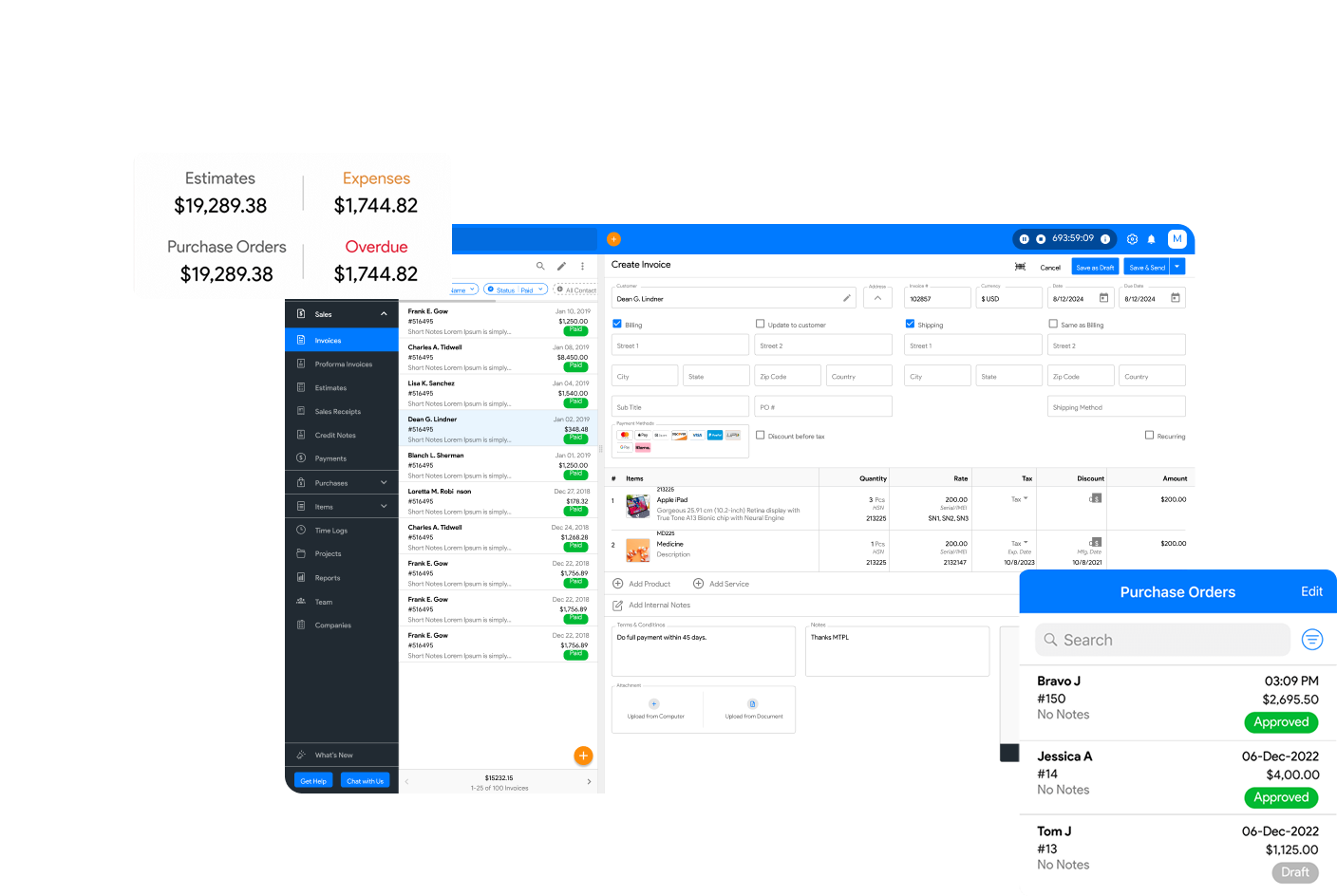
Whether you choose cash accounting or accrual accounting, pairing up your accounting method with accounting software like Moon Invoice is one of the best ways to stay ahead of your finances. With Moon Invoice, you can switch to a more advanced and automated accounting process instead of manual hurdles. It helps accounting teams process bills faster, track expenses, match invoices with purchase orders, reconcile bank accounts, and generate accurate tax reports.
Moreover, the software includes AI-powered automation that helps you track whether the recipient has opened and viewed the invoices sent via email, categorize transactions, and detect any fraudulent activity.
Accrual vs Cash Accounting: Final Verdict
When it comes to cash basis vs accrual basis accounting, it’s tough to choose one. These are two of the most used accounting methods across businesses worldwide. While cash accounting provides greater clarity on the exact amount of cash available to the business, accrual accounting makes it easier to track transactions and gives a clearer picture of the business’s true financial performance over a specific period.
Generally, small businesses prefer cash accounting to record revenue and expenses in real time, whereas large businesses commonly use accrual accounting to track financial performance.
So, which accounting method are you considering for your business? Whether you choose cash or accrual accounting, you should consider using accounting software such as Moon Invoice in your workflow to simplify your accounting tasks and stay ahead of your finances.
Explore more about Moon Invoice by starting your free trial today!
Cash vs Accrual Accounting: FAQs
1. What is the common difference between cash and accrual accounting?
The most common difference between cash and accrual accounting is the timing of revenue and expense recognition. Another key difference is in predicting the business’s cash flow. In both methods, predictions of cash flow and future business performance will differ.
2. Is cash or accrual accounting better for small businesses?
Yes, cash accounting is more ideal for small businesses due to its simplicity and direct cash flow tracking. It is best for businesses currently operating as small service companies, consulting firms, or solopreneurs.
3. Why do large businesses prefer accrual accounting?
Large businesses prefer accrual accounting because it provides a more accurate picture of financial performance by tracking revenues and expenses over a specific period. Accrual accounting plays a major role in managing complex operations and ensuring compliance with GAAP (Generally Accepted Accounting Principles).
4. How do I know if my business is cash-basis or accrual-basis?
Your business is on a cash-basis accounting if you record income or expenses only when money actually enters or leaves your bank account. However, if you record income when earned or expenses when incurred, your business uses accrual-basis accounting.
5. Can a business use both cash and accrual accounting?
Yes, a business can use both cash and accrual accounting, commonly termed as a “hybrid” or “modified cash basis” approach. In hybrid accounting, the accrual method is used for long-term assets and liabilities, but the cash method is used for daily revenue and expense recording.



We at Moon Invoice, are the best minds behind smarter invoicing and seamless business growth. We love to solve financial problems and keep providing effective tips through our blogs, newsletters, and social media channels. As a team, we continue exchanging ideas about growing financial challenges and smart use of automation tools.