


As a contractor, are you failing to acquire construction projects? Poor estimation could be a major reason you are unable to win multiple projects.
Accurate construction estimation is one of the most important parts of successfully accomplishing construction projects. When you correctly estimate the cost of equipment, labor, and overhead, it helps you plan the construction project cost and avoid wasting money and resources.
On the other hand, committing construction estimating mistakes can lead to problems in acquiring construction projects, and if you do acquire, it may result in rework, extended deadlines, or unsatisfactory work.
In this blog, we will explore the most common construction estimating mistakes you must avoid, followed by construction estimating tips to ensure the project meets practical goals.
📌 Key Takeaways
- Repeated construction estimating mistakes reduce the chances of acquiring construction projects.
- Improper evaluation of site conditions, overlooking labor costs, and failure to add contingency are the most common estimating mistakes.
- One of the major mistakes in construction projects is calculating material costs manually.
- Double-checking estimates with the entire team, senior heads, or project managers improves estimate accuracy.
8 Most Common Construction Estimating Mistakes
Estimating construction projects is a routine process for contractors, but it can’t be taken lightly. One mistake can cost hundreds of dollars in rework. As a contractor, you should avoid the following estimating mistakes in your construction projects.
1. Inability to Evaluate Cost for Site Conditions
Failing to properly evaluate site conditions is one of the most common estimating mistakes in construction projects. Sometimes, commercial construction estimators tend to rely too much on drawings and assumptions without analyzing the actual site; this leads to hidden expenses in the later stages of the project.
The site conditions of the construction project have a massive role in labor productivity, equipment requirements, logistics, and material handling. For example, poor soil conditions may require excavation, grading, or foundation reinforcement, which increases costs. If these costs are not calculated or included in the early stages, the estimate becomes inaccurate and leads to additional costs later.
Site preparation is another overlooked factor that involves clearing debris, demolishing the existing surface, leveling, and setting up drainage. Initially, these costs may look minor, but when you underestimate them, you lack clarity on their cost, which disrupts your budget.
2. Overlooking Labor Costs
It is a no-brainer that labor cost is one of the biggest expenses of a construction project. Ignoring or overlooking labor costs is another common construction estimating mistake that can eat into your profit margins before you realize it. Even a minor calculation error in hours, rates, or workforce requirements can lead to significant budget overruns.
Estimating labor costs is more than just calculating hourly wages. It includes overtime pay, taxes, insurance, training, and supervision. Generally, labor costs are calculated based on ideal working conditions. But, in some projects, there could be real-world problems such as weather delays, site accessibility, or coordination issues, which can slow down progress.
When productivity drops, more labor hours are required, increasing overall costs. Not including these additional costs makes the construction estimate incomplete and unrealistic.
Fed Up with Construction Estimating Errors?
You are not alone in this. Eliminate estimating errors by switching to professional estimate software such as Moon Invoice.
3. Failure to Include Risk Assessment and Contingency
The third most common construction estimate mistake is failing to consider potential risks and not allocating contingency costs. Construction projects deal with multiple real-world issues, and as a result, they rarely go exactly as planned. Ignoring these uncertainties often leads to unexpected expenses that quickly exceed the budget limit.
A construction project may face many challenges, such as labor shortages, material price fluctuations, design changes, or unforeseen site conditions. If any of these risks arise during an ongoing construction project, they can increase both costs and timelines.
Many contractors assume everything will run smoothly and do not include contingency allowances, which would make the project financially vulnerable.
4. Inaccurate Material Cost Calculation
Error-prone material cost calculations are among the most critical construction estimating mistakes, and they significantly impact the project’s overall budget. Materials account for a large portion of construction costs. So, even a small error can affect the entire financial planning of the project.
The biggest mistake estimators make is choosing to estimate material costs in paper-based rough notes instead of using a detailed estimate. It increases the risk of underestimating or overestimating costs. Incorrect quantity takeoffs are another common issue associated with material costs. Sometimes contractors fail to include all components, resulting in ordering fewer materials than required.
This inaccuracy and lack of clarity result in unsatisfactory estimate preparation, which reduces your chances of acquiring the project. On the other hand, overestimating material quantities increases unnecessary expenses and results in inaccurate estimates.
5. Creating Estimates with Manual Approach
Contractors often take estimation for granted and estimate everything manually. For small construction projects, it may work, but in large projects, you are likely to deal with issues such as missing cost components or duplicate entries.
Estimating manually also makes the entire process overcomplicated. It is possible that your team members may use different formats or pricing structures than yours, which can lead to inconsistencies across projects. Manually tracking material costs, labor rates, and overhead expenses becomes challenging for complex construction projects.
Therefore, it is always ideal to use a reliable construction estimating software rather than a manual approach. It helps you reduce errors and estimate faster with real-time updates.
6. Communication Gap Among Project Stakeholders
Another commonly found construction estimating mistake is a lack of communication among project stakeholders. Estimation is not one person’s job, especially in construction. It requires input from every project stakeholder, including project managers, subcontractors, architects, and clients. Important project details can be overlooked when communication gaps exist among stakeholders, resulting in incomplete estimates.
Lack of communication means you don’t fully understand client expectations. There may be specific material preferences, quality standards, or deadline requirements that impact the overall estimate and budget planning.
When details are not discussed during the estimation phase, the unwanted additional costs can affect the final budget.

7. Missing Historical Data and Past Projects
Historical data from past construction projects play a key role in creating accurate construction estimates. However, some estimators don’t follow this process or forget to check past data for the construction project. This results in missing trends, underestimated costs, or overlooked potential challenges.
When you review past estimates, you will gain more clarity on common delays, frequent scope changes, cost overruns, and other issues. These insights help estimators create accurate estimates with more relevant costs and appropriate contingencies.
If historical data is not reviewed, the same mistakes can recur, ultimately reducing the chances of winning the project.
8. Failure to Double-check Estimates Before Finalizing
Failing to have a thorough look at the estimate is one of the most common yet unnoticed construction estimation mistakes. Many construction estimation mistakes can be addressed when estimates are double-checked. Minor errors in quantities, labor hours, and pricing can be corrected if estimates are scanned in detail before sharing them with the potential client.
Skipping approval from senior heads or project managers is another key aspect of construction estimation that is often neglected by contractors. There can be minor cost changes based on the latest prices and demand, which are better known to project managers. In such cases, double-checking with the entire team helps produce a more accurate construction estimate.
Reviewing and revising estimates is part of the construction estimating process, and failure to do so can ultimately reduce the chances of your construction estimate being approved by the potential client.
Construction Estimating Tips for Contractors
Construction estimates should be made with attention to detail and reliable data. Below are the key construction estimating tips for contractors:
- Automate Estimation Process: Look forward to automating your estimation process by using reliable software. Always prefer the software that offers an AI-backed scanning feature to convert physical documents into digital estimates.
- Use Customizable Templates: Consider using customizable estimate templates if your priority is to create estimates quickly. The ready-made construction estimate templates save time and keep your estimate organized, which is key to winning projects.
- Apply Regional Cost Adjustments: Construction costs vary by location due to labor availability, transportation, and regulations. Adjust estimates based on project location to avoid underpricing or overpricing.
- Add a Contingency Buffer: Make a contingency buffer plan to combat unexpected challenges like weather delays, design changes, and material cost fluctuations. Such things can help you stay on budget.
- In-depth Analysis: You should compare estimated costs with actual project expenses after completion and analyze where deviations occurred. It helps identify inaccurate assumptions and improve cost forecasting.
- Utilize cloud storage: Develop a habit to store estimates and other important documents in the cloud-enabled platform rather than keeping them in a shoebox.
Create Professional Construction Estimates with Moon Invoice
In construction, there is no room for errors. Every construction estimation mistake reduces your chances of winning the project. Mistakes in calculating quantities or costs lead to risks such as overbudgeting or underbudgeting. So, what’s the one solution that can help you negate all these mistakes without any hassle?
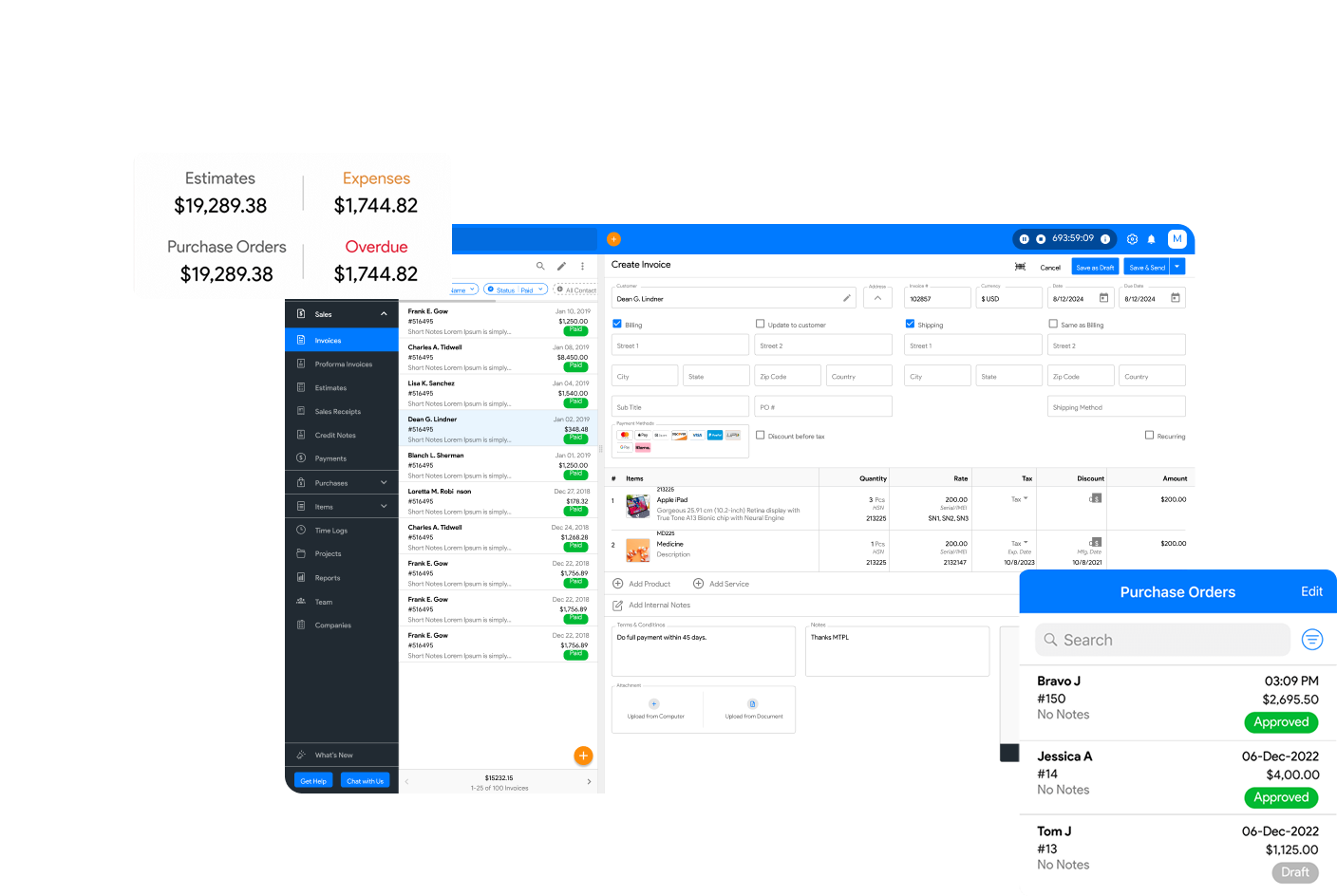
The answer is using a reputable estimation software such as Moon Invoice. As an estimator, you should think of using Moon Invoice as your estimate software, which will help you create error-free estimates without much effort. It comes with features such as customizable estimate templates that are ready-made, and you only need to fill in the necessary details to create estimates.
Once your estimate is approved by the client and the project is completed, you can easily convert the same estimate into an invoice with just one click; no need to create an invoice separately. You save time, eliminate errors, and maintain professionalism.
So, are you ready to estimate smartly? Start your free trial today!
FAQs on Construction Estimating
What is construction estimating?
What are common estimation errors?
What is the standard error of an estimate?
What are the worst construction mistakes to avoid?
How do contractors deal with construction estimation errors?


Jayanti Katariya is the founder & CEO of Moon Invoice, with over a decade of experience in developing SaaS products and the fintech industry. He holds a degree in engineering. Since 2011, Jayanti's expertise has helped thousands of businesses, from small startups to large enterprises, streamline invoicing, estimation, and accounting operations. His vision is to deliver top-tier financial solutions globally, ensuring efficient financial management for all business owners.


