




Being an electrical contractor, you know that stomach-dropping feeling of winning a bid, only to realize that you forgot to factor in the full labor burden, or undercounted the conduit by 400 feet. If so, you are not working for a profit. You are paying to work.
Underbidding kills electrical projects faster than a lack of work. Overbidding, however, isn’t a safe bet either. Play it too safe and see your competition walk away with the contract.
Electrical estimating is about pricing your jobs competitively enough to win them. And doing it with a healthy profit margin, of course.
This blog works as your guide on how to estimate electrical work correctly, so you can acquire a profitable job right away.
What is the electrical job estimation process?
It is the estimation practice to predict the total cost of materials, labor, and overhead required to complete a specific electrical work.
This practice aims to give you a financial blueprint that reveals the approximate total cost of the electric job.
Estimating electrical jobs makes sure electric professionals secure a healthy profit margin while covering all necessary expenses.
You are bidding to wire a new commercial office, for example. Using the electrical job estimation process, count every outlet, panel, and foot of conduit needed, say $4,500.
Next, compute the time your crew will take to finish the wiring job, approximately $ 2,150. Then, you include a 35% markup to cover your daily business overhead and secure your net profit, bringing the final bid to $8,977.50.
Steps for electrical cost estimating
Below, we explain electrical cost estimation steps on how to estimate electrical work. A structured approach that assures nothing slips through the cracks.
1. Identify the project scope
Initially, you need to establish the exact boundaries of the project. So, dig up a bit into electrical schematics and pay close attention to the client’s expectations. Sure, it is your opportunity to figure out exactly what is included in the job and, just as importantly, what is not.
Observe material grades and determine unique site conditions that could otherwise stall your electric work. While inspecting the scope, ask yourself if there is a need to trench through concrete to run underground conduit or if there are high ceilings that will require scissor lifts. An electrician practice that will prevent you from underbidding a complex job.
Underbidding electric jobs can cost you thousands
Get our pre-designed electrical estimate templates and ensure every expense is covered before you bid.
2. Build a quantity takeoff
Make sure you perform a quantity takeoff (a material takeoff) once you figure out the scope of the electric project. In simple words, you need to compile a list of electrical components. Itemize every foot of conduit, roll of wire, junction box, panelboard, switch, and light fixture needed to finish the job.
Remember, the more accurate your material costs are, the more precise your final electrical bid will be. Missing a few expensive components or some miscalculations can only drain your profitability. To protect margins, some electrical contractors also add a 10% waste allowance when estimating their job. By doing so, there is no need to buy extra materials out of pocket.
3. Calculate labor and material costs
Now, you must have compiled a list. Alright, time to convert those items into dollars and cents. For that, reach out to your local distributor and get current market pricing instead of relying on outdated material costs. This is because if you continue to use old price sheets, supply chain fluctuations can cause material prices to spike unexpectedly, badly impacting your profit margin in electrical contracting.
Therefore, get distributor quotes, multiply them by your takeoff quantities, and if needed, include X% of the waste buffer. Plus, see how many hours it will take to install or repair the electrical work. Once done, multiply those hours by what your workers actually cost. Their wage, as well as the hidden costs you pay for them, like taxes and insurance.
4. Get an electrical estimate template
Once you have everything in hand, obtain a ready-to-use electrical estimate template that helps you create a professional estimate. An electrical estimate, when made using a template, guarantees your bids are consistent and easy to read. Using it, you can categorize every detail so tidily that it actually grabs the reader’s attention.
What to include in the estimate?
In case you are filling the estimate template for the first time and aren’t sure what to add, here are the basic details to include.
- Electric contractor’s details: Start with your electrical business or contractor key details like legal name, phone number, and office address.
- Prospect’s information: Type the full name of the prospective client, their billing address, state, city, and contact number.
- Scope of work: Describe the scope of the electrical tasks you will perform and the property where the work will happen.
- Material and labor costs: Enter a financial breakdown of all physical parts needed and the manpower hours required.
- Total estimated cost: Calculate and specify the all-inclusive price of the electrical project, combining materials, labor, and your markup value.
- Payment terms: Include how and when you expect to be paid. Add required upfront deposits and payment dates, if required.
5. Review and submit a bid
Treat this last step as your absolute last line of defense against costly mistakes. Double-check your labor calculations and confirm whether your profit markups are applied correctly. Reviewing the project specifications is about catching a typo that can save you thousands of dollars. So, do it very carefully.
Submit your bid in a professional manner only after you are confident in the numbers. This is because it will set you apart from contractors who draw numbers on the back of a napkin and significantly improve your chances of securing a new job.
Factors affecting electrical job costs
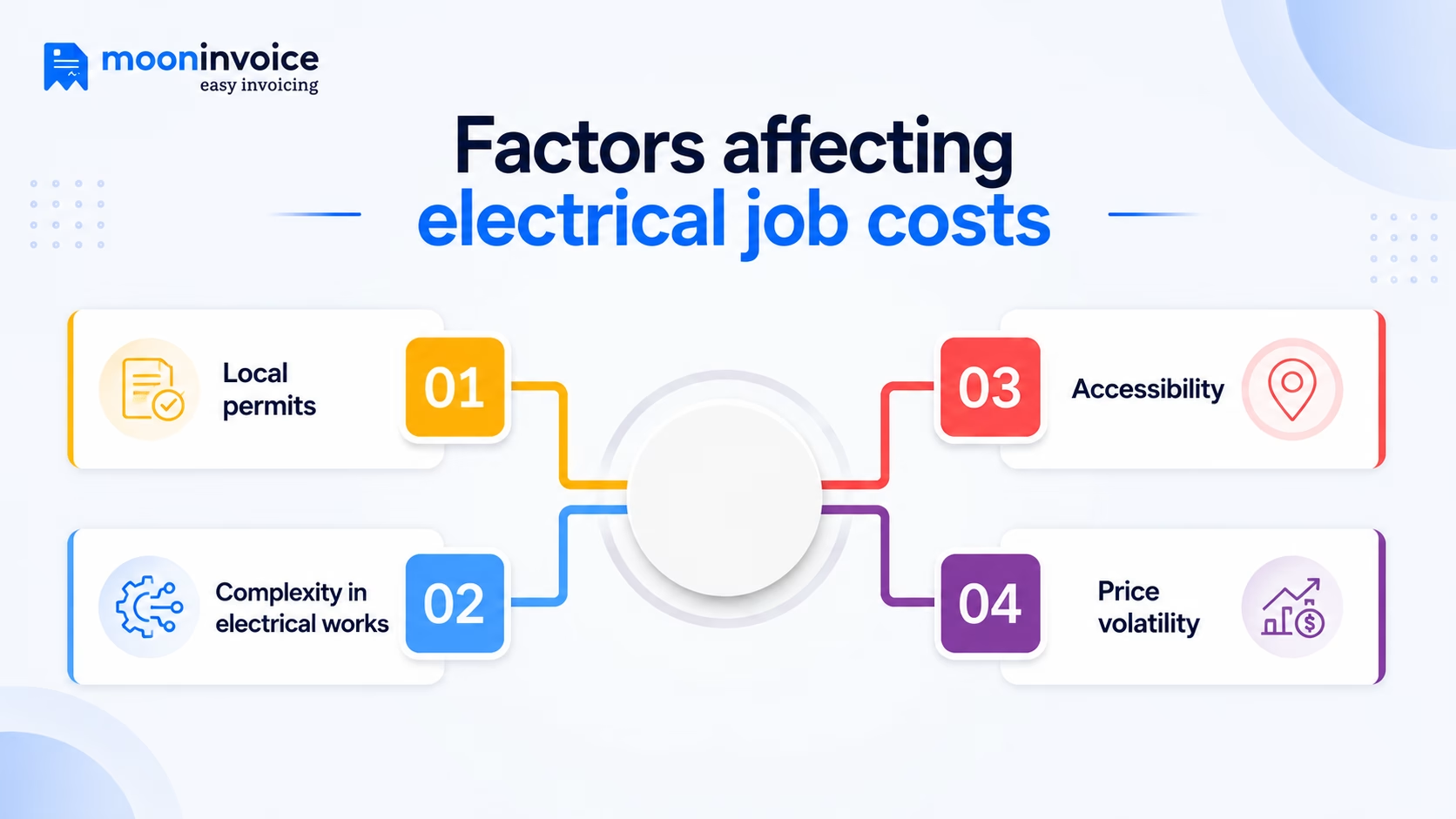
Some factors and unforeseen physical barriers can negatively impact the electrical project cost. Here are some of them that influence electrical project pricing.
1. Local permits
Obtaining local permit fees can raise the job costs. This means paying local departments a fee just to review and give you a permit to perform the electrical work. Usually, such costs come out of the electrician’s budget, impacting the overall electrical job pricing.
2. Complexity in electrical works
Complexity in residential or commercial electrical estimating, especially for large ones, can increase the material cost. Jobs requiring expensive parts and specialized tools, along with experienced electricians, can quickly uplift the cost of the project.
3. Accessibility
Job accessibility will also inflate your labor costs if a site is tough to get around in. Your crew may spend their day countering the physical challenges. When this happens, the job time will increase, and so will your cost to keep laborers.
4. Price volatility
Uncertainty of electrical commodities such as copper and aluminum can influence your electrical job cost. Mainly because of fluctuations in the global supply chain and rising market demands. A quote shared with a prospect months ago can result in unwanted financial losses.
Different estimating methods for electrical contractors
Here are the estimating methods preferred by electrical professionals when pricing their jobs.
1. Unit pricing
This method allocates a fixed price for every unit, like a cost per meter of wiring or a cost per square foot for a basic layout. Professionals, especially residential electricians, go by this method because it makes scaling electrical project bids faster.
2. Per-point method
The per-point method shifts the focus away from linear measurements like meters or square feet. It accounts for physical connection endpoints. For electrical professionals, this method is especially useful when bidding on residential tract housing or standard commercial office floors.
3. Assembly method
Assembly-based estimating is where a contractor uses specialized electrical systems to group materials, hardware, and labor hours required to perform a specific job. The electrical estimator puts all of them in a predefined assembly (a single unit). By doing this, they can simply select the single package instead of manually counting whatever is needed for the installation.
4. Guesstimating
Although it is the most reckless way to price a project, some electrical contractors still guesstimate to secure their work. Using it, they simply throw out a quote right off the top of their head without opening a spreadsheet. Because this method is completely based on gut feeling.
How can electrical contractors overcome estimating hassles?
No electrician likes staring at blueprints at midnight, counting every single wall plug until their eyes blur. Well, it’s a bottleneck that keeps you chained to your desk instead of growing your electrical business.
Such estimating hassles can be overcome by using the right software like Moon Invoice. The advanced electrical estimating software, Moon Invoice, offers AI automation in estimating and invoicing, so you can close the bid 2x faster. It is someone who takes care of accuracy when making estimates or quotes. A complete automated estimation process that allows you to sleep peacefully, knowing that your numbers are accurate.
Some key Moon Invoice features, using which you can transform the electrical estimating process:
- Readymade estimate templates
- Personalized invoices
- Online payment gateways
- AI contact creation (customers & vendors)
- Quarterly and summary reports
- Financial statements
- Bank reconciliation
- Offline mode
Automate estimating and protect your profit
Try Moon Invoice that actually adapts to your estimation needs.

Estimate templates
Auto-calculation
Online sharing

General Queries About the Electrical Job Estimation Process
What’s the best way to bid for electrical work?
What estimating method is best for residential electrical work?
How much should I charge per square foot for electrical work?
What is an ideal profit margin for an electrical contractor?
How to bid electrical jobs by square foot?



Jayanti Katariya is the founder & CEO of Moon Invoice, with over a decade of experience in developing SaaS products and the fintech industry. He holds a degree in engineering. Since 2011, Jayanti's expertise has helped thousands of businesses, from small startups to large enterprises, streamline invoicing, estimation, and accounting operations. His vision is to deliver top-tier financial solutions globally, ensuring efficient financial management for all business owners.