

When you run a business, cash flow becomes the backbone of your entire daily operations. Cash flow issues, such as customers paying late, can derail your business more than any bad product or poor marketing. This is where DSO (Days Sales Outstanding) comes in. It exactly measures how many days it takes for your business to turn your sales into actual cash.
Reducing the DSO of your business can be challenging, especially if you are operating a growing business. Even though you theoretically know what DSO is, to reduce DSO, you must know how to find the value of DSO in your business.
In this blog, we will explore what DSO means, its formula, and how to improve DSO performance of your business.
Let’s get started…
📌 Key Takeaways
- Days Sales Outstanding (DSO) measures the average time a company requires to convert its credit sales into cash after an invoice is issued.
- To improve DSO, you must strengthen credit policies, set clear payment terms, and automate your invoicing.
- Primary causes of a rising DSO include loose credit policies, ineffective invoicing practices, and inaction on late payers.
- Businesses must calculate their DSO using monthly, quarterly, or annual data to address cash flow issues before they hurt their annual revenue.
What is Days Sales Outstanding (DSO)?
Days Sales Outstanding (DSO) is a financial metric that shows the average time a business takes to collect payments after making a sale. Simply, we can say it helps determine how long the amount remains unpaid before it is deposited into your account.
If your DSO is low, it means your business’s cash inflow is strong, and customers are paying faster. On the other hand, a higher DSO means your business is repeatedly dealing with late payments, higher outstanding receivables, and cash flow issues, even when your sales look good on paper.
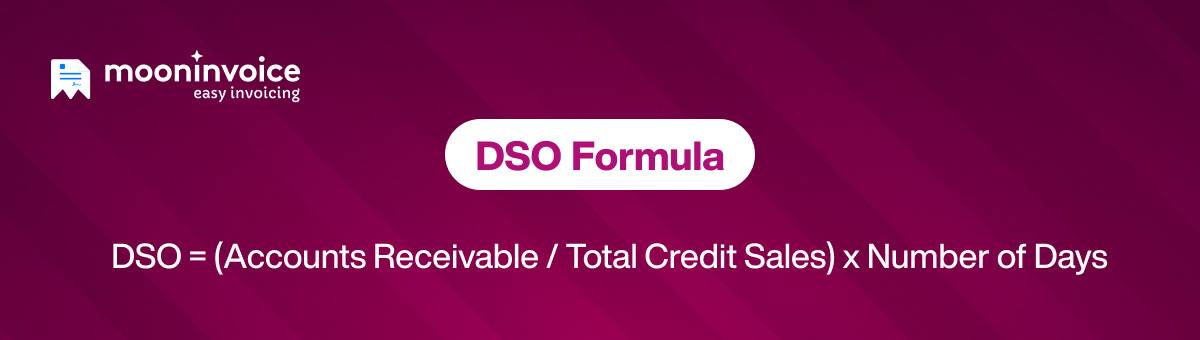
DSO Formula:
7 Effective Tips on How to Improve DSO and Cash Flow
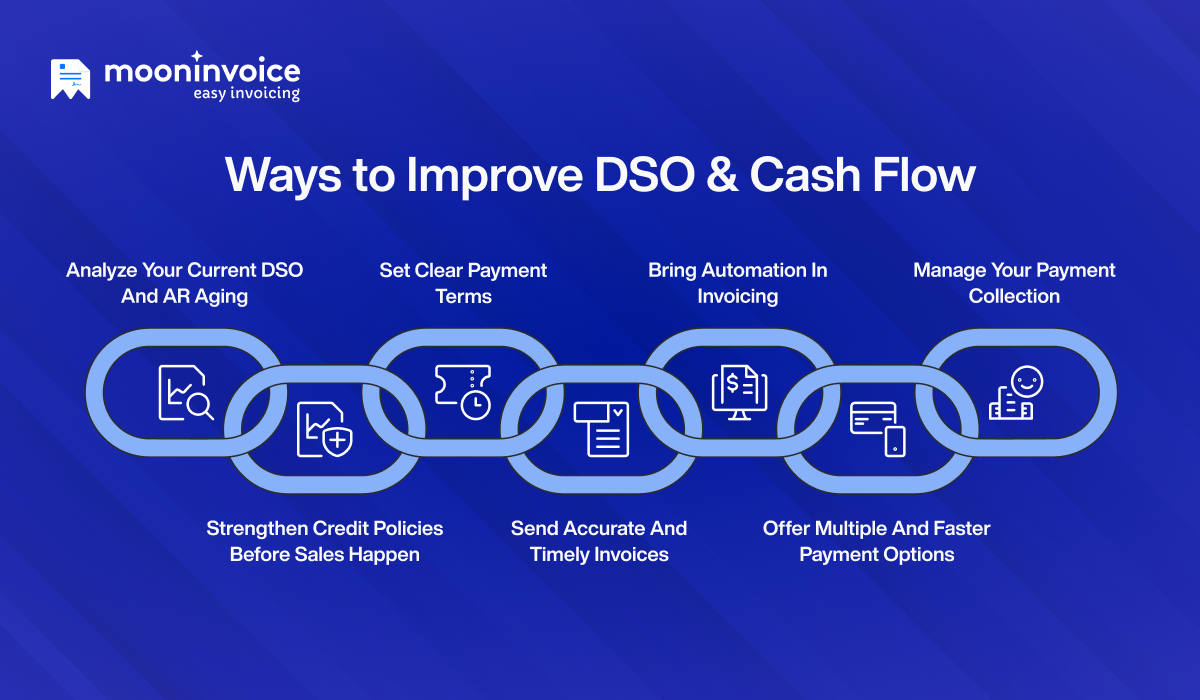
Reducing DSO doesn’t mean you should start chasing your customers aggressively. It is about fixing the processes that cause delay. Below is a step-by-step DSO improvement strategy that helps improve your cash flow without damaging customer relationships.
1. Analyze Your Current DSO and AR Aging
Before making any changes, you need to know exactly where your receivables stand today.
Get started by reviewing all of your previous DSO for a specific period and comparing it against internal records. Next, examine your AR (Accounts Receivable) aging report, which is a document that categorizes outstanding invoices based on a specific time period. You can analyze current overdue invoices, 1-30 days overdue invoices, 31-60 days overdue invoices, and so on.
Analyzing the current DSO and AR aging report helps you understand:
- Which invoices are slightly delayed vs. severely overdue
- Which customers are regularly paying late
- How much cash is stuck in the long-pending receivables
By following this, you will lay a strong foundation for reducing payment delays and improving the overall cash flow of the business.
High DSO Dragging Down Your Business Growth?
Don’t let unpaid invoices create a cash flow bottleneck. Switch to Moon Invoice and automate your invoicing instantly.
2. Strengthen Credit Policies Before Sales Happen
Make sure payment risks are controlled before a sale is closed. It helps reduce DSO much faster.
Firstly, define clear credit eligibility criteria by reviewing the customer’s payment behavior and past defaults. These small initiatives can prevent future collection issues.
Secondly, set a credit limit based on transaction volume and risk level. Sometimes, mismanaged or unlimited credit limits for every customer result in payment delays and higher outstanding balances.
Another key consideration is documenting credit terms clearly before an invoice is issued.
3. Set Clear Payment Terms
Unclear payment terms are among the most common reasons for payment delays, which leads to a higher DSO.
When you set payment terms, make sure they align with your business model and cash flow needs. Following another business’s pattern could backfire for your business. Consider shorter terms, such as Net 7, Net 15, or milestone-based payments, which are more effective than extended credit periods. Longer payment terms should be applied only to the most reliable, low-risk customers.
The payment term you set should be simple, specific, and visible. Every time you create a financial document, such as an invoice, contract, or quotation, you must clearly mention the due date, accepted payment methods, and penalties or additional charges for late payments.
Now, one more thing to note here is ensure payment terms are formally agreed upon before work begins. Otherwise, it will be difficult to enforce payment terms when collecting payments. Written acceptance via email or contract reduces disputes and helps you collect payments faster.
4. Send Accurate and Timely Invoices
Sometimes, even when your payment terms are clearly defined, you may still face high DSO due to incorrect or delayed invoices. Sending an invoice on time is directly proportional to how quickly customers process payments.
You should issue an invoice immediately after a sale is completed or a milestone is achieved. Delayed invoices reduce the chances of receiving payments on time, and customers often deprioritize payments for delayed invoices.
When sending invoices quickly, make sure they are accurate and error-free. If invoicing is becoming cumbersome, consider establishing a more structured process in coordination with your finance team. Simplifying how invoices are prepared and reviewed, or using a reliable tool where appropriate, can help minimize mistakes and inconsistencies.
Sending accurate invoices on time can single-handedly improve the DSO of your business.
5. Bring Automation in Invoicing
Another way to improve your Days Sales Outstanding (DSO) is to automate your financial workflow. You should consider using invoicing software to automate invoicing and speed up payment collection, which will ultimately improve DSO. Sometimes, inconsistent communication and delayed payments are the biggest reasons behind a poor DSO, and automation can help eliminate them without any hassle.
Automation strengthens the entire invoicing process by ensuring invoices are sent to clients on time and consistently. They also notify you when the client reads the email and checks the invoice, which makes invoice tracking easier.
Using automation software can improve your entire payment collection process. However, some customers still need an extra push to complete payments. In such cases, automated payment reminders can be scheduled before the due date, on the due date, and after the due date, to collect payments faster.
6. Offer Multiple and Faster Payment Options
Not having fast, reliable payment options could be another reason your customers refuse to pay. You should offer multiple payment options that don’t require unnecessary steps to complete a payment.
To reduce your DSO, consider offering multiple payment methods, such as bank transfers, ACH, online gateways, and digital wallets, so customers can choose and pay fast. Limited options could slow down your payment collection, leading to past-due payments.
On top of that, you can also offer early payment incentives or discounts to collect payments faster. Price cuts for paying within a specified period (like 7 days before the due date), percentage-based early payment discounts, or flat discounts on future invoices encourage customers to prioritize your invoices over others. Plan discounts in such a way that they don’t affect your annual revenue.
7. Manage Your Payment Collection
Even with automated reminders in place, businesses should actively monitor their payment collection process to address situations where payments remain overdue. Reviewing receivable reports regularly helps identify accounts that may need personal intervention, clarification, or escalation.
In such cases, a timely and professional follow-up can resolve disputes or delays that automation alone cannot handle. Maintaining oversight ensures that exceptions are managed quickly, preventing receivables from accumulating and helping sustain a steady, predictable cash flow.
What Are the Common Causes of Rising DSO?
There are multiple causes why the DSO of your business could be high. It could be due to slower invoice processing, repeatedly overlooking customers’ late payments excuses, or industry norms, such as industries with varying payment cycles.
Below are some of the common causes of rising DSO:
- Loose Credit Policies: When credit is extended without proper checks or limits, businesses often end up working with customers who have weak payment capacity. Over time, this leads to delayed payments and higher outstanding receivables. It pushes the DSO upward.
- Manual Invoicing: Processing invoices manually increases the chances of delays, errors, and missed follow-ups. Late invoice delivery to businesses with complex internal approvals may cause payment delays, resulting in rising DSO.
- Economic Downturns: During economic slowdowns, customers may face cash shortages and prioritize essential expenses over invoice payments. Even reliable clients can start paying late, which increases DSO.
- No Action on Late Payers: When overdue invoices are not consistently followed up on, customers assume delays are acceptable. Lack of reminders or escalation weakens payment discipline and encourages repeat late payments.
- Seasonal Fluctuations: Some businesses experience uneven cash inflows due to seasonal demand. During off-peak periods, customers may delay payments, which leads to temporary spikes in DSO that affect overall cash flow.
- Change of Business Model: Transitioning to a new pricing structure, subscription model, or longer contract cycle can alter how and when customers are billed. During this adjustment phase, invoicing patterns and payment behaviors may shift, causing temporary delays and an increase in DSO until processes stabilize.
How to Calculate and Track DSO Effectively?
Businesses must closely monitor their Days Sales Outstanding to ensure healthy cash flow. If not calculated or tracked consistently, payment delays may go unnoticed and affect your revenue.
First, we will understand how to calculate DSO using the standard formula, and then how to track it.
Calculating DSO
The standard formula for calculating Days Sales Outstanding (DSO) is:
Using this formula, businesses should calculate their DSO for a defined period, such as monthly, quarterly, or annually.
Let’s assume a business has:
- Accounts receivable at the end of the month = $100,000
- Total credit sales during the month = $600,000
- Number of days in the period = 30
Using the formula:
It means the business takes an average of 5 days to collect payment after issuing an invoice.
Tracking DSO
Calculating DSO alone is not enough. Businesses should track it monthly or quarterly to identify trends rather than focusing on a single number.
Here’s how DSO should be tracked:
- Compare current DSO with past records to identify changes in payment delays.
- Review DSO alongside AR aging reports to find out where overdue invoices are piling up.
- Divide DSO by customer or invoice to quickly spot high-risk accounts.
How Moon Invoice Helps You Reduce DSO?
If you are considering a solid DSO reduction strategy, adopting invoicing software such as Moon Invoice can make a measurable difference. The platform allows businesses to create professional, fully customizable invoices that align with their branding and clearly communicate payment terms.
Moon Invoice simplifies invoice creation, delivery, and minimizes manual errors which ensures invoices reach clients promptly. Clear presentation, accurate details, and timely communication encourage customers to prioritize payments, thereby accelerating collections and improving overall cash flow. Over time, this consistency plays a key role in reducing the DSO of your business.
Plus, it comes with 20+ payment integrations, such as bank transfers, ACH, cards, PayPal, and Apple Pay, which ensure your customers can make payments on time using their preferred option.
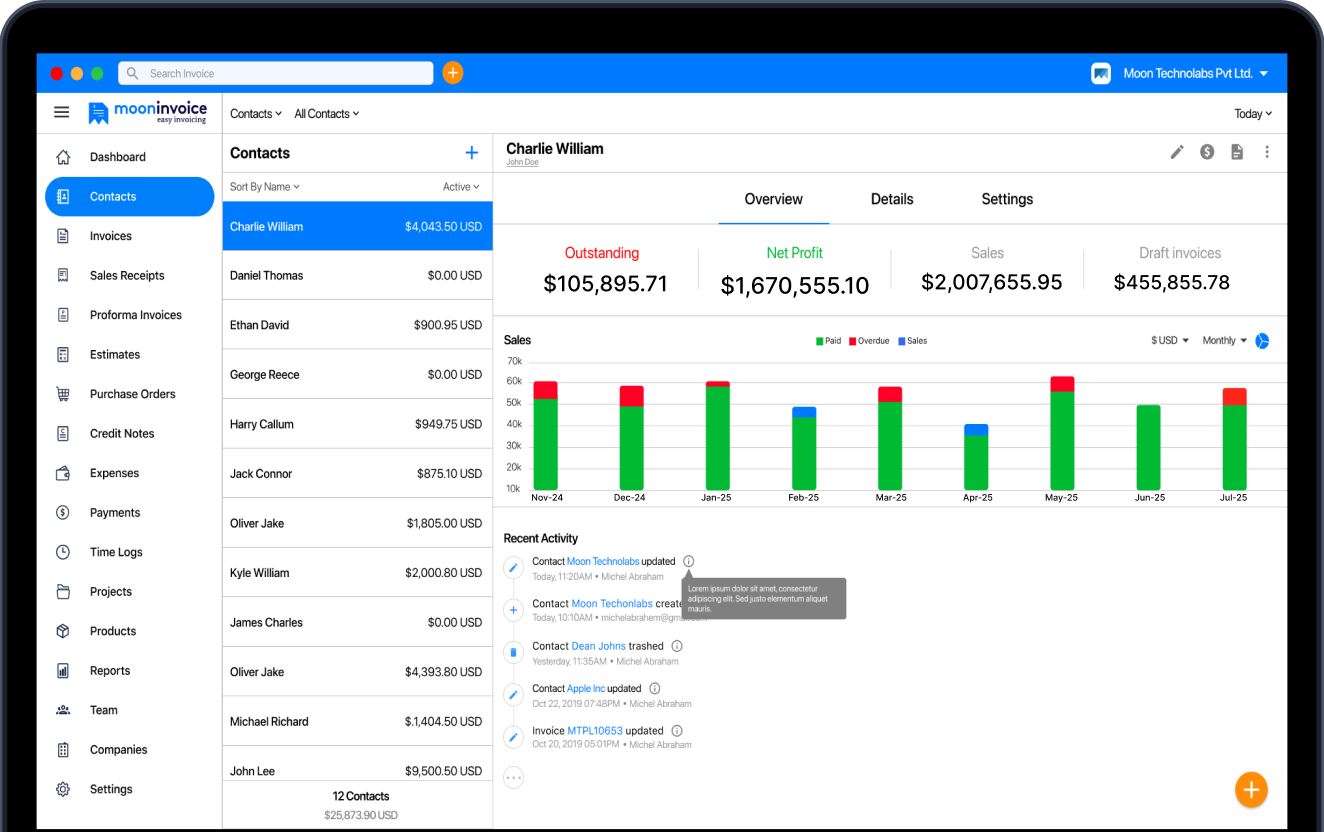
With Moon Invoice, you can easily filter out which customers regularly pay late (unpaid invoices) and which customers are generally on time. For late payers, you can follow up in the software through email and may apply penalties or extra charges. When late payers start paying on time, your overall cash flow improves, and so does your DSO.
Turn Your Receivables into Cash Instantly
Automate your invoicing processes with Moon Invoice and lower your DSO.
Track Invoices
Automate Reminders
Generate Reports
Final Words
The DSO of your business determines how quickly you collect payments from clients after an invoice is issued. Monitoring and improving DSO is essential for maintaining steady cash flow and ensuring that payments are received within expected timelines. A higher DSO means you are likely facing cash flow issues, which can affect your business operations.
To reduce DSO, the first initiative is to get away from manual processes. Sometimes, even with strong planning, delays and frequent errors can lead to a higher DSO. You should consider using software that can help you set clear payment terms, send timely invoices, and automate payment reminders.
So, if you are searching for an invoicing software that helps you reduce your DSO, Moon Invoice is your answer.
Start your free trial now!
FAQs
What is a good DSO for a business?
How do clear payment terms impact DSO?
Can invoicing software help improve DSO?
Is low DSO good or bad?
How to improve days payable outstanding?



We at Moon Invoice, are the best minds behind smarter invoicing and seamless business growth. We love to solve financial problems and keep providing effective tips through our blogs, newsletters, and social media channels. As a team, we continue exchanging ideas about growing financial challenges and smart use of automation tools.