


December’s knocking, and your books are quietly asking, “Ready?”
Honestly, year-end has a way of showing up fast. One minute you are chasing invoices, and the next you are staring at closing entries or approaching tax deadlines.
That’s where a clear year-end accounts checklist can help, ultimately making the closing procedure less stressful.
With a complete checklist in hand, you can review numbers confidently and close the books as early as possible. After all, it’s you who decides where to be headed next?
The average monthly close takes 6.4 calendar days, CFO.com reports, based on APQC research.
Year-end Closing for Accounting: What Is It?
Year-end closing refers to the accounting practice of reconciling and vetting every financial transaction of the past fiscal year. The idea is to stay audit-ready by preparing financial statements for the defined period. Accountants are responsible for scanning documents properly and making an accurate report, so there are no discrepancies.
This once-in-a-year process aims to keep all net income, expenses, liabilities, assets, and equities correctly in the statement. The books are closed only when there is a balance between the incoming and outgoing money.
Don’t Let Year-end Catch You Off Guard
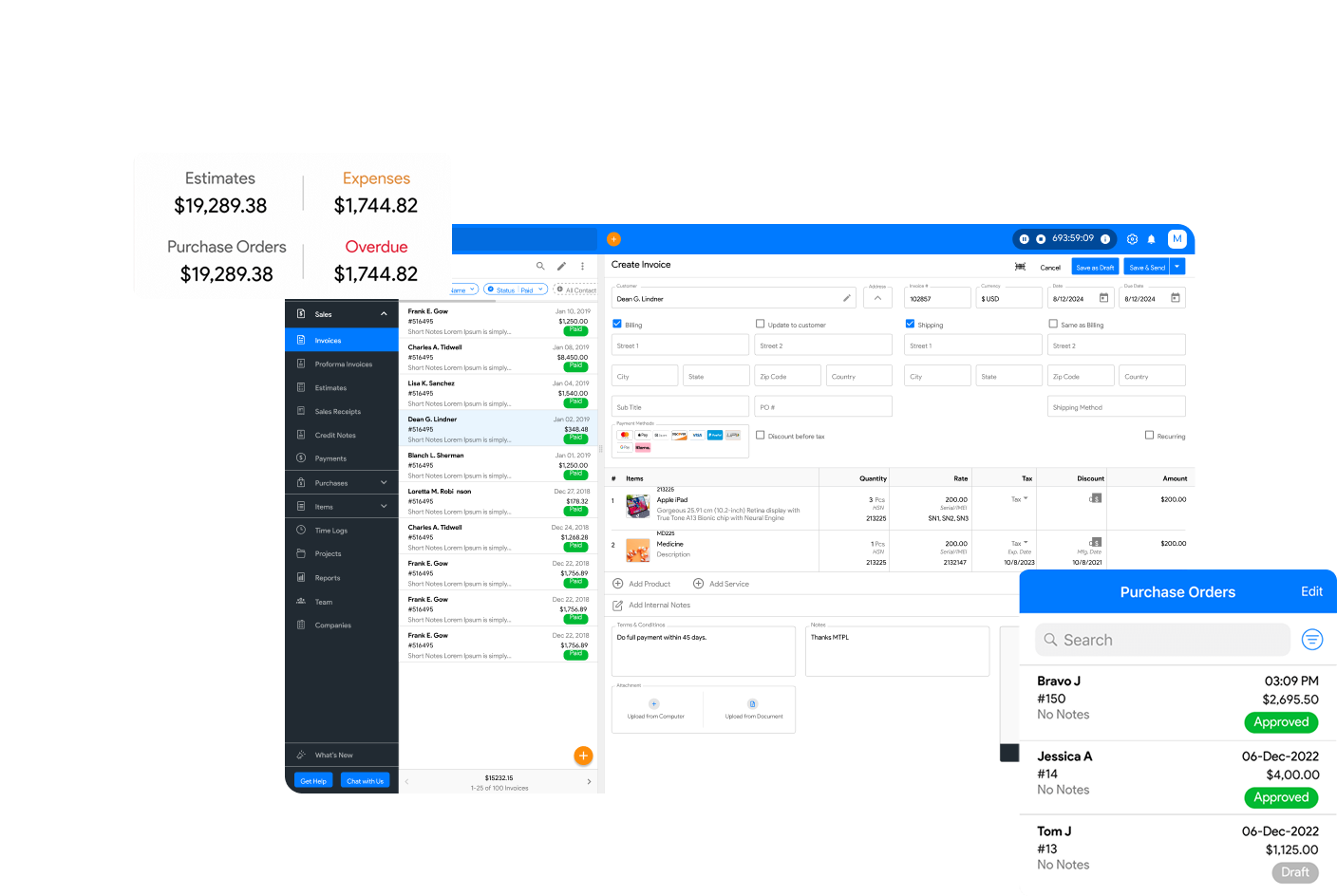
Centralize invoices, expenses, and reports in one place with Moon Invoice, so closing your books at year-end never becomes a last-minute scramble.
The Ultimate Year-end Checklist
Here is your end of year accounts checklist to follow while performing closing procedures.
1. Make a Closing Timeline
First of all, choose a preferred closing timeline when approaching December. Because year-end closing runs smoother when everything is well-organized upfront. For that, know what actions you want your team to perform, and accordingly schedule their tasks.
Scheduling a timeline is a must, or else, your team may take weeks to close the books successfully. Therefore, plan everything ahead of time, considering the availability of team members, holidays, and work commitments. Of course, there would be some dependencies, where the team can’t proceed further until authorization. Hence, oversee such things as well to prevent any bottleneck.
2. Centralize All Documents
As an accounting professional, you know year-end closing procedures hinge on all related documents. That’s obvious – you need to double-check you have the document’s original or a duplicate copy. Once found, centralize them because these documents will be later reviewed by your team when checking accuracy in the reconciliation process. Below are some documents you need to keep in hand.
- Customer/vendor invoices
- Bank statements
- Summary reports
- Tax return copy (Previous year)
- Sales reports
- Inventory Valuation Report
- Loan accounts information
Centralize your documents digitally in advanced invoicing software like Moon Invoice, so you don’t need to conduct a manual search. You can store unlimited documents in cloud storage for easy accessibility, which means your team does not get burned out during the year-end procedures.
3. Review What’s Outstanding
Now, this is something that can quickly make things stressful, especially if you don’t have sophisticated tools. At this point, what you require is to check what is outstanding in the accounts payable and accounts receivable.
This holds utmost significance, as your team is responsible for accurately specifying what the business owns and owes in its financial reports. The verifying process revolves around checking vendor invoices and comparing them with purchase orders to determine what’s exactly due. Plus, scanning customers’ unpaid invoices and reminding them to perform required actions from their end.
4. Accumulate Past-due Invoices
While you monitor closely what’s outstanding, don’t forget to go through past-due invoices or overdue invoices. These invoices often get buried inside the recipients’ inboxes and eventually end up sitting unpaid in your records. So, dig them out and dispatch reminders to all delinquent clients about their financial obligations.
This way, you can recover as much as possible of what others owe you before closing the books. With one eye set on past-due invoices, ensure you also keep a tab on accruals and adjusting entries like unpaid expenses that have been incurred but not yet recorded.
5. Conduct Bank Reconciliation
Commence the bank reconciliation process at the end of the year to assure the internal records actually mirror your financial activity. Instruct your team to compare bank statements or debit/credit card statements with the actual cash flow movement.
By doing so, you can identify discrepancies and take necessary actions before things spiral out of control. Nullify timing differences that may arise due to gaps between when transactions are recorded and when they are processed.
Such things may not appear if the bank or payment reconciliation is done consistently by your team. Otherwise, be ready to spend hours on finding the root cause of errors in bookkeeping. The team can proceed further if and only if they have reconciled the bank or payment data successfully.
6. Run Inventory Check
Following the reconciliation process, it’s time to review what you have left in the inventory by the year’s end. For that, examine inventory reports closely and compare with what’s left in the shelves. Focus on damaged items or goods nearing the expiry date because you may require adjustments to assess their value.
At this stage, figure out ending inventory management by adding beginning inventory to net purchases and then taking off the Cost of Goods Sold (COGS). In short, confirm the inventory is valued correctly and measured based on whatever method you select.
7. Review and Record Depreciation
As part of your closing procedures, review fixed assets and double-check depreciation records for the past year. Office equipment, company vehicles, and other technology tools shed value over time, and therefore, such things must be added to your financial statements.
Thus, it is necessary to verify your fixed asset register and affirm that depreciation calculations align with your chosen method. If any new assets were bought or old ones disposed of during the same year, record them correctly and adjust accordingly. This process aims to maintain the true value of what your business owns in the balance sheet.
8. Get Financial Statements Ready
Now that your records are verified, start assembling your financial statements. This closing procedure follows making profit and loss statements (P&L), along with accounts receivable and accounts payable summaries. The process isn’t only about closing the books but also about keeping you ahead of the tax season.
By doing so, you get a clean picture of your company’s financial health and how well it performed during the last year. Not only you, but also provides a transparent view to external stakeholders when reports are crystal clear and well-documented.
9. Buckle Up for Potential Audit
Lastly, gear up for a potential audit in a way that your records can withstand scrutiny from tax authorities. No matter if you are legally required to undergo an audit or not, accounting books should be well-organized and accurate.
Therefore, ensure internal controls are followed throughout the year, and unusual transactions are justified properly. In case you outsource the auditing process, align early to comprehend their areas of focus and required documentation. Showing audit readiness doesn’t mean you are in trouble, but it reflects confidence in your numbers.
Challenges in Year-end Closing Procedures
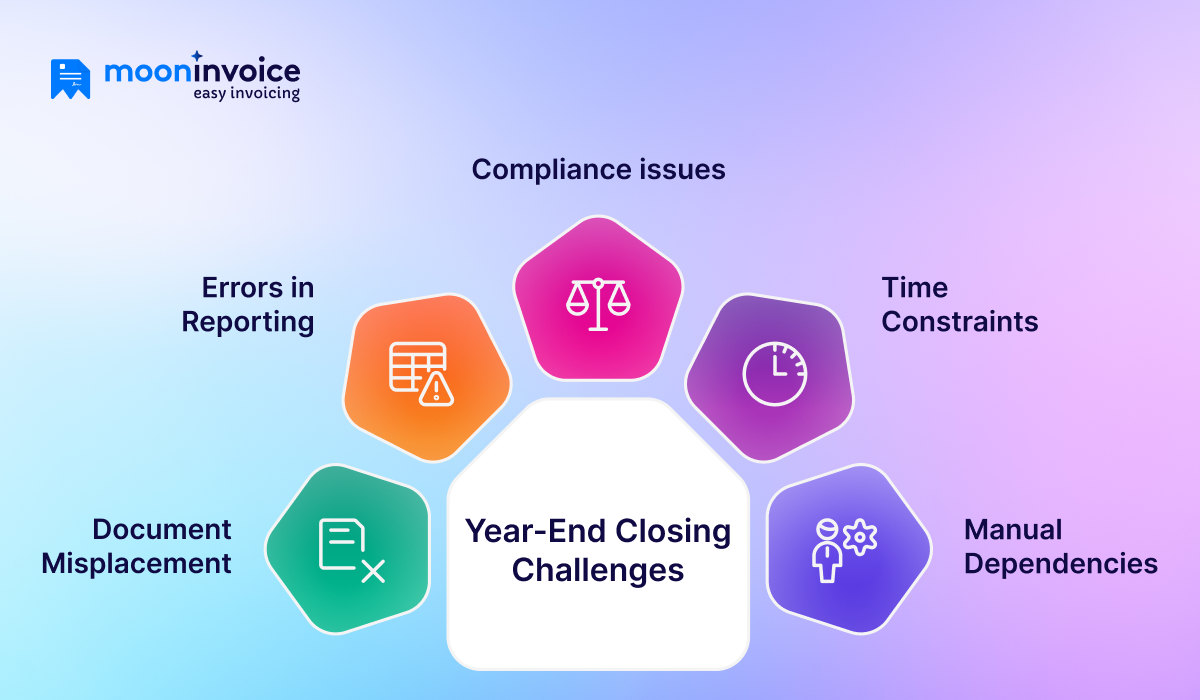
1. Document Misplacement
Every accounting team yields frustration when they are unable to collect the paper because some documents may have faded, while others might simply be misplaced. Such things can eventually stall the reconciliation process, and the closing process may take more time.
2. Errors in Reporting
Some minor errors in financial reporting are unavoidable, especially when you take a manual approach. Number mismatches and overlooked line items will lead to inaccuracy that further steals your time in closing books under tight deadlines.
3. Compliance issues
Changing tax codes and reporting guidelines can pile up compliance issues if neglected, leading to serious consequences. A small negligence can have a really big impact, drawing hefty penalties.
4. Time Constraints
Accounting professionals often find themselves soaked in the pressure of closing the books under tight deadlines. In fact, it is the biggest hurdle in the year-end accounting because the team gets burned out due to a limited time window.
5. Manual Dependencies
Dependencies on manual checks can extend your closing process, as matching and verifying numbers manually often takes time. Each step largely depends on someone else completing their part first.
What Are Best Practices for Year-End Accounting?
Below are some ideal practices for year-end accounts to follow when nearing the end of the year.
- Commence the year-end closing process as early as possible, so there are no last-minute hiccups.
- Reconcile bank, credit card, and loan accounts consistently throughout the fiscal year.
- Keep reviewing accounts receivable and, accordingly, take follow-up on overdue invoices.
- Closely monitor incoming vendor invoices and maintain records once payments are made.
- Keep an eye out for product inventory and update records accordingly.
- Centralize invoices, receipts, reports, and other documents on a single invoicing or accounting platform.
- Consult with finance experts to ensure compliance with tax rules and regulations.
Close the Year Stronger Than Ever With Moon Invoice
Approaching year-end and then realizing a payment marked as done was never actually deposited in your account. Such situations only give you stress sweats, probably because records are scattered across Google spreadsheets, emails, and whatnot.
That said, many accounting firms prefer using Moon Invoice when it comes to bank and payment reconciliation. Moon Invoice is a feature-rich invoicing software that helps firms reconcile transactions, generate reports, and organize expenses.
Moon Invoice keeps costly mistakes (that may snowball) at bay and enables accountants to create glitch-free reports at month-end or year-end. As a result, accountants can close the year stronger in significantly less time.

People Also Ask
1. What are year-end accounts?
Year-end accounts refer to the financial reports that reflect how your business performed on the financial front over the fiscal year. They offer insights into revenue, current assets, expenses, and liabilities.
2. How to manage outstanding invoices at year’s end?
Start reviewing the invoice aging report in a bid to drill down into which invoices remain unpaid. Accordingly, set the priorities and remind your clients about their payment duties to settle pending dues before the books are closed.
3. What to include in a year-end accounting checklist?
Reconciling bank statements, credit/debit accounts, reviewing outstanding invoices and payables, verifying inventory levels, and identifying depreciating assets are things to be included in the year-end close checklist.
4. How can I prepare a year-end balance sheet?
Automate reconciling all transactions using advanced accounting tools like Moon Invoice and prepare an accurate balance sheet in just a few clicks. Once done, finance professionals can download the sheet in PDF format or even take a printout if needed.



We at Moon Invoice, are the best minds behind smarter invoicing and seamless business growth. We love to solve financial problems and keep providing effective tips through our blogs, newsletters, and social media channels. As a team, we continue exchanging ideas about growing financial challenges and smart use of automation tools.


