
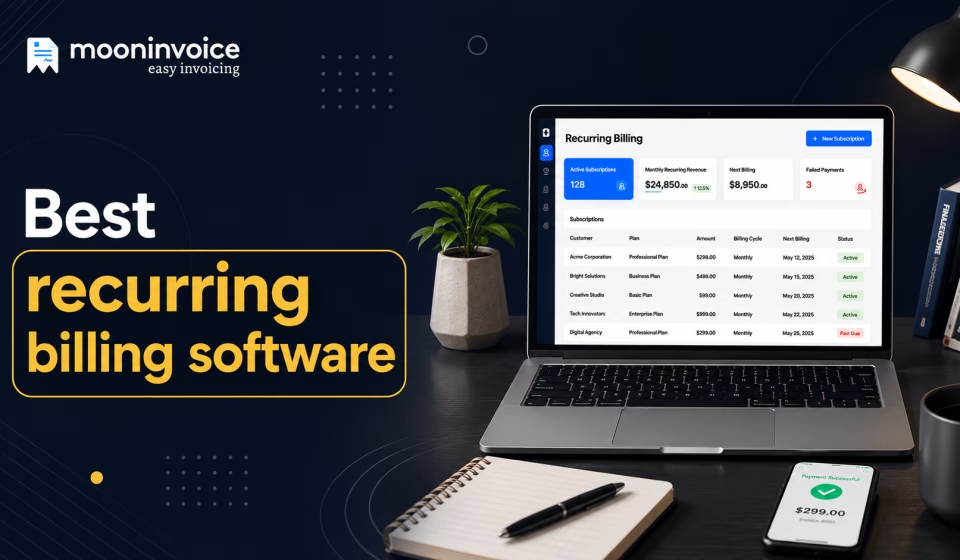


Your SaaS customers don’t want to remember payment dates, and you want predictable revenue for your SaaS products. Both can be achieved, but not while your sales team is still relying on manual methods to track renewals, update plans, and chase down failed payments. Doing everything manually can affect your revenue and put pressure on your sales team.
You don’t need more spreadsheets to fix it. You need to use the best recurring billing software to automate recurring payments for your SaaS products. Generally, the process of recurring billing includes invoicing, payment collection, failed payment retries, and revenue tracking.
Moving ahead, we will explore the 7 best software for recurring billing, along with their pros, cons, and why you should use recurring billing software in your business.
Let’s jump straight in…
📌 Key takeaways
- Recurring billing software is a digital solution that helps process bills and collect payments automatically.
- Moon Invoice, Zenskar, and Maxio are among the best software for recurring billing for SaaS and large to small businesses.
- Centralizing subscription data and automating the payment process are two key benefits of recurring billing software.
- Automated invoice generation and subscription management are two must-have features to consider in recurring payment software.
What is recurring billing software?
Recurring billing software refers to an automated tool or software that automatically generates invoices and collects payments from customers at a scheduled interval (weekly, monthly, or annually) for products or services. There is no need to send invoices manually in every billing cycle; instead, businesses can schedule recurring payments. Once scheduled, the software will automatically generate invoices, process payments, and send payment reminders to customers.
The core processes of recurring billing include creating a recurring billing schedule. It starts with specifying the bill amount, start date, billing frequency, and payment method. Once it is active, the software will automatically handle everything from generating invoices to collecting payments on the due date. It also tracks payment status and, if the transaction fails, retries it, so there won’t be any revenue loss.
For example, a SaaS company offering a product on a monthly subscription can use a recurring billing software to charge customers automatically every month. This will help the company focus more on growth and productivity rather than billing and payment.
Keep recurring billing on autopilot
Let Moon Invoice automate your recurring bills without any headaches.
A quick comparison table of online recurring billing software
There are multiple recurring billing software that offer different features. Here, we have compared the 7 best recurring billing software based on their features, pricing, ease of use, and the types of businesses they are best for.
| Recurring Billing Software | Key Features | Pricing |
|---|---|---|
| Moon Invoice | Automated recurring invoices with customizable billing frequency, payment reminders, financial reports, and support for 20+ payment gateways. | Starts at $6.67/month (if billed annually) |
| Zenskar | Recurring billing with support for usage-based, hybrid, and contract-based billing workflows. | Custom pricing |
| Maxio | Subscription billing combined with revenue recognition and recurring invoicing. | Starts at $599/month |
| Recurly | Subscription management with automated dunning. | Starts at $249/month + 0.9% of billing volume |
| Zuora | Enterprise-grade subscription billing and multiple payment gateway integration. | Custom pricing |
| Chargebee | Subscription lifecycle management with recurring billing and multiple payment gateway integration. | Starts at $7,188/year |
| Solidgate | Subscription billing platform with recurring payment automation, payment routing, and retry logic. | Custom pricing |
7 best recurring payment solutions
Below is a list of the 7 best recurring billing software based on different categories. Let’s explore them now:
Best for SaaS companies
1. Moon Invoice
Moon Invoice is AI-ready billing & invoicing software that simplifies recurring payments of SaaS companies with features such as AI contact creation and invoice tracking. For subscription-based businesses, it helps automate recurring invoices for monthly, quarterly, or yearly billing cycles.
Setting up recurring billing for your SaaS products is a one-step process with Moon Invoice. Once setup is complete, the software will automatically generate invoices as per your preferred interval and help you collect payments faster.
Moon Invoice can be a great fit for SaaS companies looking to grow with AI-backed automation software.
Pros:
- Schedule recurring invoices for monthly, quarterly, or yearly.
- Recurring billing capabilities and multiple payment options.
- Simplified payment tracking with status update.
Cons:
- Some advanced recurring features are available only on premium plans.
2. Zenskar
Zenskar is suitable for SaaS companies that want recurring billing software with a subscription management platform. Apart from subscription handling, it also handles revenue recognition, SaaS reporting, and churn management.
It can automatically generate branded recurring invoices from customer contracts and allow teams to review or hold invoices before sending. Its API-first architecture can be ideal for businesses seeking billing flexibility.
Pros:
- Handles subscription and usage-based billing.
- It is an API-first platform.
Cons:
- Mostly works well for SaaS businesses only, not traditional service companies.
- Require technical configuration for accessing advanced features.
3. Maxio
Maxio is a subscription billing platform primarily for B2B SaaS companies, automating recurring billing and recurring revenue management. The platform can handle recurring charges, usage-based components, and seat-based pricing.
With Maxio, your business’s billing data feeds directly into financial reporting and metrics tracking. It is particularly suitable for companies that need both recurring billing and advanced financial reporting.
Pros:
- Combines recurring billing with revenue management.
- Integration with CRM software.
Cons:
- Not ideal for non-SaaS businesses.
- The pricing plan may feel expensive for startups and freelancers.
Best for freelancers
4. Recurly
Recurly is another subscription billing software for startups and freelancers that want to automate their recurring payments and minimize failed transactions. With Recurly, you can offer any pricing model and checkout flow that aligns with your existing tech stack.
It also has built-in active fraud management that helps you identify any discrepancies, prevent churn, and minimize chargebacks. Recurly can be a good addition to businesses that want to manage subscriptions, payments orchestration, and churn management in one place.
Pros:
- Recurly has much higher payment success rates
- Simplified subscription management features.
Cons:
- Can be expensive for businesses when subscription volume grows.
- Limited accounting functionality apart from subscription billing.
5. Zuora
Zuora is a recurring billing platform specifically built for global freelancers and growing SaaS companies. It supports subscription plans for any model, including one-time charges, milestone billing, usage-based fees, and even a hybrid model.
Businesses with unique billing needs often choose Zuora because it allows them to customize recurring billing logic and monitor deployments for new product launches on a single platform.
Pros:
- Scales well for global enterprise operations.
- Strong support for billing, renewals, and revenue management.
Cons:
- Higher implementation costs than SMB-focused software.
- May feel complex for freelancers looking for a simpler recurring billing solution.
Best for large-scale enterprises
6. Chargebee
Chargebee is another recurring billing and subscription management software platform that is highly effective for large-scale enterprises. It offers a unified billing solution for managing highly complex subscription models, such as multi-year, hybrid, or tiered pricing.
Chargebee also offers multiple payment methods, which can be ideal for businesses operating globally. The software is also capable of automating the customer lifecycle, i.e., from trial management to revenue recovery.
Pros:
- Supports recurring billing and subscription models.
- Integration with payment gateways.
Cons:
- Premium plans could leave a hole in your pocket
- Complex initial setup and may require additional configuration.
7. Solidgate
Solidgate is another example of a subscription billing system well-suited to large-scale businesses. It has advanced recurring billing features, among which payment orchestration is a long-sought feature for handling a large volume of payment transactions.
Revenue recovery infrastructure, global payment method coverage, and unified subscription & payment analytics are major highlights of Solidgate. Businesses willing to improve their payment approval rates while managing subscriptions across multiple payment providers can choose this recurring subscription software.
Pros:
- Recurring payment optimization and payment routing.
- Supports international payment processing.
Cons:
- Focuses more on payment infrastructure rather than complete invoicing.
- Better suited to global businesses than to small and medium-scale businesses.
Benefits of recurring billing software
Adopting recurring payment solutions helps you simplify the entire billing process of your business. Below, let’s explore some of the top benefits of recurring billing software.
- Automates the payment process. Each recurring bill is scheduled for a specific period (monthly, quarterly, or annual) so you always receive payments on time.
- Helps predict incoming cash flow. Consistent and timely payment collection ensures predictable revenue and reduces delays caused by manual invoicing.
- Centralizes subscription data. You don’t need to track subscription data one by one. The software helps you centralize subscription data and track renewals and plan changes seamlessly.
- Improves customer experience. Billing software can improve customer satisfaction rate due to flexible payment options, timely reminders before due dates, and subscription management without relying on the support team.
- Saves administrative time and negates errors. As recurring billing is automated, it saves time on manual follow-ups and minimizes costly data-entry errors.
- Scales your pricing model faster. In SaaS businesses, pricing often changes frequently. Using a recurring billing software helps you execute these changes easily without rebuilding your billing infrastructure.
Features to look for in recurring payment software
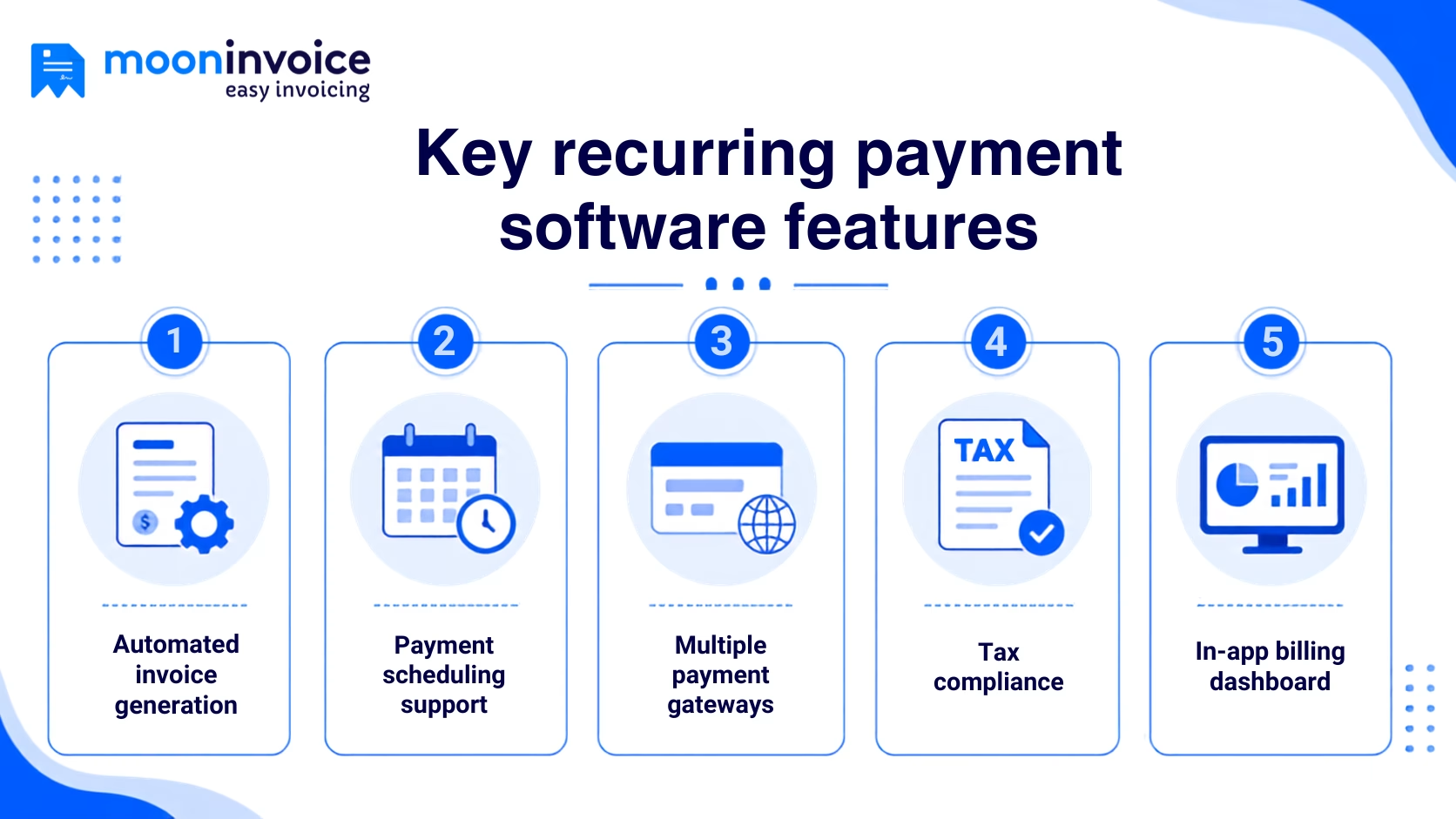
The billing software you choose should include the following features to provide better financial visibility as your business grows.
1. Automated invoice generation
Automation is 100% a need for almost every SaaS or subscription-based business. It allows you to set up a recurring invoice once, after which the software automatically generates and sends invoices according to the predefined billing schedule. It generates invoices accurately without any manual dependency, which is why it is a necessary feature to consider.
2. Support for payment scheduling
Apart from automated invoice generation, the software should be capable of configuring billing schedules, whether monthly, quarterly, or annually. Beyond payment scheduling, it should also support automated payments so that you receive payments on time.
3. Multiple payment gateways
Next, you should look for multiple payment gateways; i.e., the software should offer multiple payment options so customers can pay using their preferred method. If your business operates globally, look for multiple currencies and secure online payments for clutter-free transactions.
4. Tax compliance
The recurring billing software should support tax compliance by applying the correct tax rules based on your customers’ location and applicable regulations. It should also accommodate region-specific tax requirements to help generate accurate, tax-compliant invoices across different markets.
5. In-app billing dashboard
Lastly, you look for a centralized billing dashboard feature in recurring billing software. The software should provide access to key billing metrics, including invoices, subscriptions, payment statuses, and customer records. Generally, advanced recurring payment apps provide insights into annual recurring revenue, payment trends, and churn rate to monitor your recurring revenue.

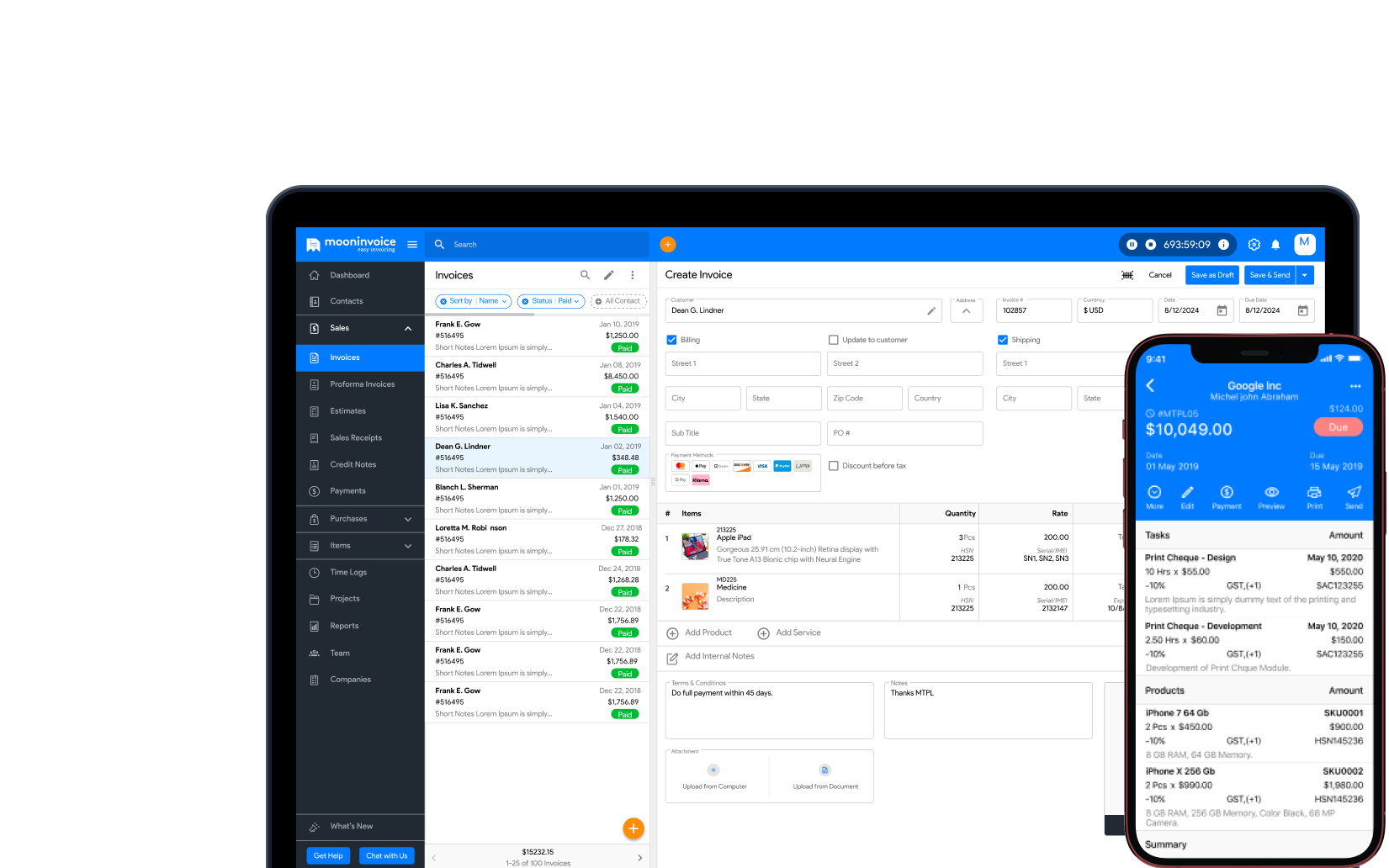
Simplify recurring billing with AI-powered automation software
Choosing the best recurring billing software for your business is a daunting task. Each software has both pros and cons, so you need to clearly prioritize your needs before selecting one. If you are looking for online recurring billing software with AI-backed features to help you scale in the long run, Moon Invoice is a clear choice that meets your business needs.
With Moon Invoice, consider manual follow-ups are gone for good. Because you can schedule recurring invoices for a specified period, offer multiple payment methods to your customers, and manage all your recurring payments within one platform. Neither do you have to chase payments nor rely on multiple tools to manage recurring bills.
What are you waiting for, then? Get Moon Invoice for your business now!
Additional Questions on Recurring Subscription Software
What are the best platforms for automated recurring billing?
How much does recurring billing software cost?
How do subscription billing tools help reduce churn and failed payments?
What is the difference between recurring billing and subscription billing?



Jayanti Katariya is the founder & CEO of Moon Invoice, with over a decade of experience in developing SaaS products and the fintech industry. He holds a degree in engineering. Since 2011, Jayanti's expertise has helped thousands of businesses, from small startups to large enterprises, streamline invoicing, estimation, and accounting operations. His vision is to deliver top-tier financial solutions globally, ensuring efficient financial management for all business owners.