




The term “handyman” isn’t a specific category like plumbing or electrical work. When we say a handyman job, it includes maintenance work, repairs, carpentry, painting, replacing fixtures, installing shelves, and more.
So, when you work as a handyman service provider or own a handyman service firm, you need to price your handyman jobs carefully. Because inaccurate pricing could cost you hundreds of thousands of dollars in profit, and if pricing issues are not addressed early, losses could cause your firm to shut down.
But no need to panic, because by following this handyman pricing guide, you will be able to understand how to price handyman jobs accurately and keep it consistent as your firm grows.
Let’s dive in…
📌 Key takeaways
- The average hourly rate for handyman jobs in the United States ranges from $60 to $125.
- A handyman pricing list should include labor, materials, overhead costs, along with profit margins.
- Effective handyman pricing starts with understanding the requirements and inspecting the job site.
- Calculating labor costs, material costs, and overhead costs are the must-have steps to follow when pricing handyman services.
- Hourly pricing, flat-rate pricing, and per-project pricing are the primary pricing models for handyman jobs.
What does pricing a handyman job actually include?
The final estimate of a handyman job should include the following:
- Labor costs: Calculate the required labor, estimate the time needed, and factor in expertise based on an hourly rate or any other pricing model.
- Material costs: Estimate the cost of all materials, such as supplies and fixtures, that are required to complete the work.
- Equipment costs: Based on the job requirement include expenses for tools, equipment and machinery required to complete the job.
- Overhead costs: Account for business expenses such as insurance, licenses, vehicle maintenance, and administrative costs.
- Taxes and applicable fees: As per the handyman job requirement, specify taxes such as sales tax, service tax, or any other in the estimate.
- Profit margin: Account for the amount above the total cost that ensures the job contributes to the handyman’s business profit.
- Contingency costs: Specify costs for unforeseen incidents or surprise expenses before the work begins so that, once the work starts, it won’t affect the overall budget of the handyman job.
Cut the estimating workload
Convert your paper estimates into digital estimates within seconds with Moon Invoice.
Average handyman hourly rate in the U.S.
In the U.S., the average hourly rate for handyman jobs ranges between $60 and $125. Sometimes the price falls between $60 and $90 for general repairs and maintenance. The table below shows the hourly rate for handyman jobs in major U.S. cities.
| City | Average hourly rate | Average invoice total | Most common handyman job type |
|---|---|---|---|
| New York, NY | $65 | $198 | Apartment maintenance and general home repair. |
| Washington, DC | $58 | $182 | Home maintenance, carpentry, and punch-list work. |
| Boston, MA | $27 | $148 | Carpentry, weatherproofing, and home repairs. |
| Atlanta, GA | $22 | $140 | General repairs, drywall, and fixture installation. |
| Cincinnati, OH | $55 | $176 | General repairs, carpentry, and deck maintenance. |
| Chicago, IL | $26 | $145 | Apartment repairs, carpentry, and plaster/drywall work. |
| Minneapolis, MN | $24 | $142 | Weatherproofing, carpentry, and general maintenance. |
| St. Louis, MO | $25 | $144 | General home repairs, carpentry, and maintenance. |
| Kansas City, MO | $40 | $160 | Drywall, carpentry, doors, and exterior repairs. |
| Houston, TX | $23 | $140 | Drywall, doors, fixtures, and weather-related repairs. |
| Dallas, TX | $50 | $171 | General repairs, drywall, doors, and fence work. |
| Denver, CO | $54 | $173 | Carpentry, drywall, and general home maintenance. |
| Las Vegas, NV | $22 | $140 | Drywall, doors, fixtures, and property maintenance. |
| San Francisco, CA | $30 | $153 | Victorian-home maintenance, carpentry, and general repairs. |
| Seattle, WA | $65 | $196 | Carpentry, weatherproofing, decks, and home maintenance. |
How to price handyman jobs: step-by-step guide
Estimating a handyman job starts with calculating every small part of the project. Use the following handyman pricing strategy to create estimates that reflect the actual cost involved.
Step 1: Understand requirements
The first step is to understand what the customer actually wants. Ask specific questions about the type of repair or installation, preferred materials, the property’s location, and when the work needs to be completed.
For example, if it is about “repairing a door,” it is too broad to price accurately. You should be clear on whether the customer needs an adjustment, a hardware replacement, or a complete repair.
Ask the potential customer to share photos or videos, so you’re on the same page during the site visit. Capturing these key details helps you identify the work involved and prepare for the site inspection.
Step 2: Inspect the job and define scope
Once you understand the customer’s requirements, inspect the job site to determine exactly what the handyman work involves. Check the condition of the area, accessibility, measurements, existing fixtures or structures, and any factors that could make the job more time-consuming.
Installing a fixture may require additional work if the existing wiring or mounting point needs modification. That’s why inspection is a crucial step during the handyman cost estimation process.
Use your inspection to create a specific scope of work that states what you will do, what materials or services are included, and what is excluded. The scope of work you prepare will provide a reliable foundation for estimating labor and costs without any misunderstandings.
Step 3: Estimate labor hours
Once the scope is clear, estimate how much hands-on time the job will require. Break the handyman project into individual tasks rather than assigning a single broad time estimate. Consider preparation, actual work, cleanup, and any time needed to make adjustments or troubleshoot unexpected issues.
Also account for the job’s complexity and whether more than one person is required. In handyman jobs, the project duration and complexity are major factors in determining costs.
When estimating labor hours, you should consider:
- Task-by-task time: Estimate the hours required for each activity rather than guessing the total.
- Preparation and cleanup: Include time spent protecting the work area, setting up tools, and cleaning up afterward.
- Job complexity: Allow additional time for difficult access, older fixtures, repairs, or troubleshooting.
- Travel or material runs: Include billable time when your pricing model allows for travel or purchasing supplies.
Step 4: Calculate labor costs
After estimating the required hours, convert them into a labor cost using your established hourly rate. This gives you the portion of the estimate that covers your time and expertise.
To calculate labor costs, use the formula:
For example, suppose a handyman estimates that repairing and repainting a damaged interior door will take 4 hours, and the handyman’s labor rate is $75 per hour:
So, the estimated labor cost for the job is $300.
Keep in mind that your hourly rate should be competitive for your market while reflecting your experience, skill level, and the type of work you perform. Once you establish the labor cost, you can account for materials, job-specific expenses, overhead, and profit in the following steps.
Step 5: Add material costs
After calculating labor cost, determine the cost of every material needed to complete the job. Since material costs for handyman jobs can change frequently, use the quantities identified during the inspection and check current supplier prices rather than relying on older estimates.
Next, you should include small consumables and hardware that are easy to overlook, such as screws, anchors, sealants, adhesives, or replacement fittings. If you purchase materials on the customer’s behalf, you can also account for sourcing, handling, and delivery costs or apply a material markup, depending on your pricing policy.
Keeping material costs separate from labor makes the estimate easier for prospects to understand and helps you avoid absorbing expenses that should be part of the job price.
Step 6: Include other job-specific expenses
Not every cost associated with a handyman job falls under labor or materials. Review the project for additional expenses based on its location, complexity, or requirements.
Include these in the estimate rather than adding them unexpectedly to the final invoice. Common examples include travel or service call charges, equipment rental, parking, disposal fees, delivery charges, and permit costs where applicable.
For instance, if a repair requires renting specialized equipment or transporting bulky materials to the property, include those costs in the estimate. Listing these expenses as separate line items also gives the potential customer a clearer understanding of what they are paying for.
Step 7: Add overhead costs
After accounting for direct job costs, include a portion of your ongoing handyman business expenses that are necessary to operate but cannot be tied to one specific project. Spread these costs across your billable work so each job helps run the business.
Common overhead expenses include:
- Business insurance and licensing fees
- Vehicle payments, fuel, maintenance, and insurance
- Tool replacement and equipment maintenance
- Phone, internet, and estimating or invoicing software
- Marketing, advertising, and bookkeeping
A practical way to calculate this is to divide your monthly overhead by your monthly billable hours to determine an overhead cost per hour, then apply it to the estimated hours for the job.
Step 8: Include profit margin
You complete the job with hours or days of hard work, and in the end still lose money? This can happen when you don’t add a strong profit margin to your estimate.
After calculating labor, materials, job-specific expenses, and overhead, add a profit margin to the estimate. Profit supports business growth, reinvestment, and financial sustainability, so calculate your profit margin appropriately, or your handyman firm may never grow.
For example, if the total cost of completing a job is $800 and you want a 20% markup, the calculation would be:
- Profit = $800 × 20% = $160
- Estimated price = $800 + $160 = $960
Be careful not to confuse markup with profit margin. A 20% markup adds 20% to your costs, while a 20% margin means profit represents 20% of the final selling price.
Step 9: Review and send the estimate
Before sending the handyman estimate, review every cost and confirm that the final price reflects the actual scope of work. Check your labor hours, material quantities, additional expenses, overhead allocation, profit, taxes, and any applicable discounts. This final review can help catch calculation errors or overlooked costs before prospects receive the estimate.
If everything is accurate, send the estimate to the customer and retain a copy for your records. A clear, itemized handyman estimate template has a better chance of earning client approval and winning the project.
Handyman pricing formula
A handyman pricing formula helps you turn estimated labor, materials, overhead, and profit into a practical job price instead of relying on guesswork. Below is the standard formula many self-employed handymen and licensed handyman contractors use to price jobs.
Types of pricing for handyman jobs
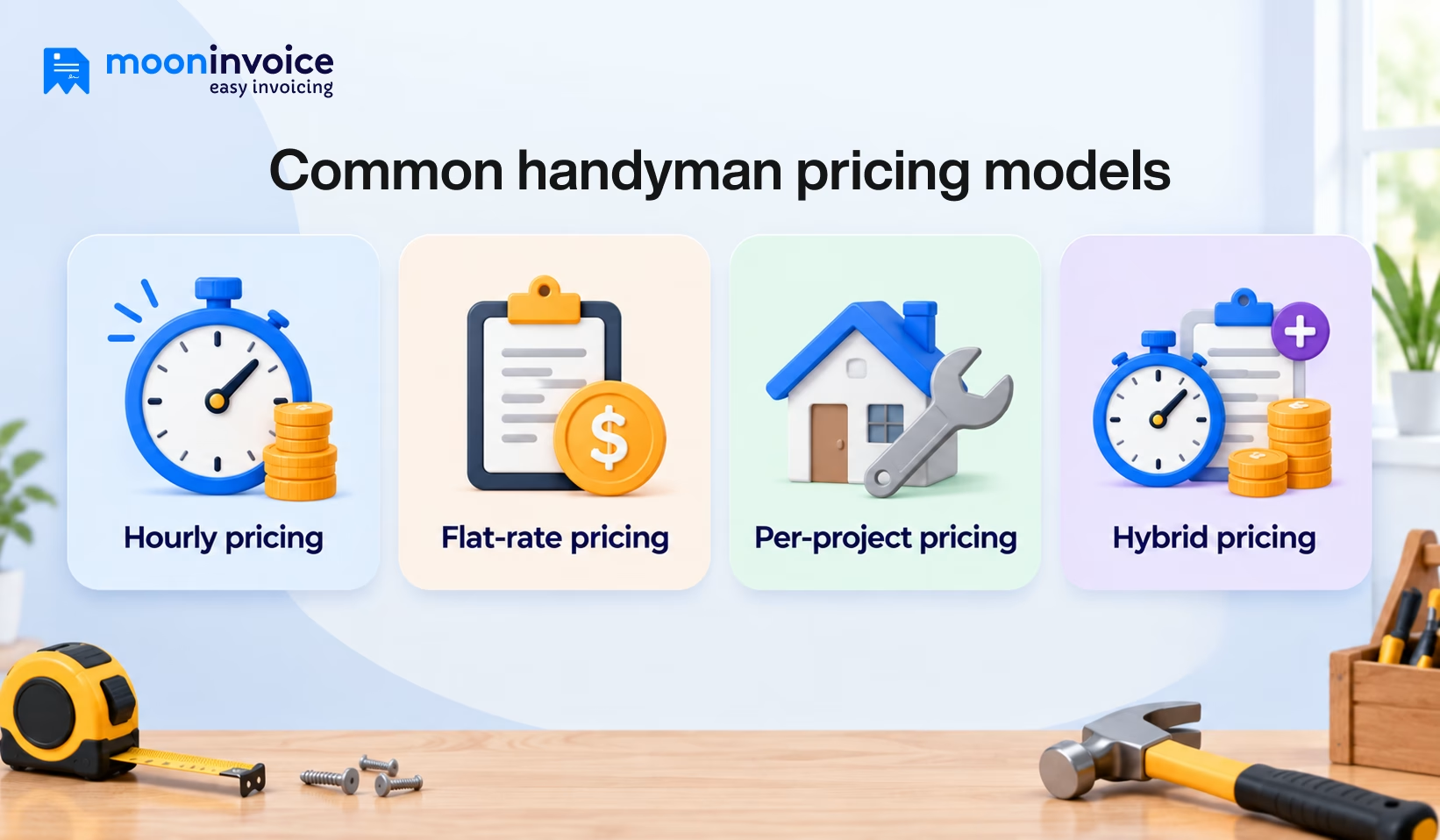
Handymen can use different pricing models depending on how predictable the work is and how much time it may require. Choosing the right model helps you create estimates that cover costs and generate profit.
1. Hourly pricing
Hourly pricing means charging the customer for each hour spent working on the job, usually with a minimum service charge. It works well for repairs, troubleshooting, punch lists, or jobs where the required time is difficult to predict.
In the U.S., handyman hourly rates range from $60 to $125 per hour, with a national average of $65 to $90 per hour. However, several factors determine a handyman’s hourly rate. Depending on whether you are a low-end worker, mid-end (self-employed handyman hourly rate), or high-end (licensed contractor), the price may vary.
2. Flat-rate pricing
Flat-rate pricing refers to quoting one predetermined price for a clearly defined task, regardless of how long the work takes. The flat-rate or flat-fee model works best when you have enough experience to estimate the labor, materials, and other costs accurately.
The average flat-rate handyman job in the U.S. ranges between $150 and $600. Common flat-rate jobs include TV mounting, furniture assembly, drywall patching, and faucet replacement.
3. Per-project pricing
Per-project pricing applies one total price to a larger or more comprehensive project rather than charging separately for each task or hour. It works well for jobs with a clearly defined scope, such as a small renovation.
In the United States, the average cost for handyman work under a per-project pricing model ranges from $65 to $1,200 per project.
4. Hybrid pricing
Hybrid pricing combines two or more pricing methods within the same job. For example, you might charge a flat rate for a defined repair and use an hourly rate for additional work that falls outside the original scope.
The average handyman cost in the U.S. under the hybrid model falls between $150 and $400.
Materials to estimate for a handyman job
When preparing a project estimate, list every material required, including small supplies that are easy to overlook. The following table explains which materials you should consider when preparing an estimate for your handyman work.
| Material category | What to include |
|---|---|
| Primary materials | Materials required for the repair, installation, or improvement, such as drywall, lumber, tiles, or paint. |
| Hardware and fasteners | Screws, nails, anchors, brackets, hinges, bolts, and other installation hardware. |
| Replacement parts | Fixtures, fittings, handles, valves, switches, or other components being replaced. |
| Consumable applies | Caulk, adhesives, tape, sandpaper, sealants, and similar supplies used during the work. |
| Finishing materials | Primer, paint, grout, wood filler, touch-up products, and other finishing materials. |
| Safety and protective supplies | Gloves, protective coverings, masks, or other supplies needed to complete the job safely. |
Stop guessing. Estimate faster with Moon Invoice
Avoid repetitive work and convert your approved estimates into an invoice with a single click.
Customizable templates
Estimate tracking
Audit-ready reports
Closing thoughts on pricing handyman jobs accurately
Most handyman job estimates lack clarity and fail to win projects. When you prepare handyman estimates, you should add every detail, such as labor, materials, overhead, and other job-specific costs, too. However, creating every estimate manually takes time and increases the risk of calculation or data-entry errors.
Using ready-made templates and an automated estimating process can help handyman service providers easily organize project details, calculate costs, and create consistent estimates. Moon Invoice, an advanced contractor invoicing software, offers ready-made, customizable estimate templates that help handymen and contractors create professional estimates without starting from scratch.
An error-free, professional estimate helps prospects understand the project scope and cost. This ultimately increases the chances of winning more handyman projects.
So, what are you waiting for? Create estimates with Moon Invoice today!
Frequently asked questions
How do you estimate labor costs for handyman work?
What should be included in a handyman estimate?
What is the difference between a handyman estimate and a quote?
How much profit margin should a handyman charge?



Jayanti Katariya is the founder & CEO of Moon Invoice, with over a decade of experience in developing SaaS products and the fintech industry. He holds a degree in engineering. Since 2011, Jayanti's expertise has helped thousands of businesses, from small startups to large enterprises, streamline invoicing, estimation, and accounting operations. His vision is to deliver top-tier financial solutions globally, ensuring efficient financial management for all business owners.