


Quick summary
Outsourced bookkeeping is a practice in which businesses hire external parties to manage their bookkeeping tasks. This is often beneficial for saving time and money and for organizing accurate records. It is a good option for small and other growing businesses.
Managing business accounting is not easy. Financial records need to be handled carefully to maintain accuracy. In this fast-paced environment, businesses often struggle with time management. This is where outsourced bookkeeping can help.
It’s a popular practice that many businesses adopt. They hire external bookkeeping professionals to manage their financial records and pay a fee in return. This reduces the workload of the in-house accounting department. It also saves time and keeps them focused on their core business.
In this guide, you’ll explore what outsourced bookkeeping is, its workings, and key benefits.
📌 Key takeaways
- Outsourced bookkeeping refers to hiring an external team to handle business bookkeeping.
- Transaction recording, bank reconciliation, and financial reporting are key practices that the team handles.
- Data security, service quality, communication, and software compatibility are important considerations when hiring an outsourced bookkeeper.
- Choosing an outsourced bookkeeping service reduces workload and helps businesses focus on their core work.
- The practice is particularly useful for growing businesses when handling bookkeeping internally is challenging.
What is outsourced bookkeeping?
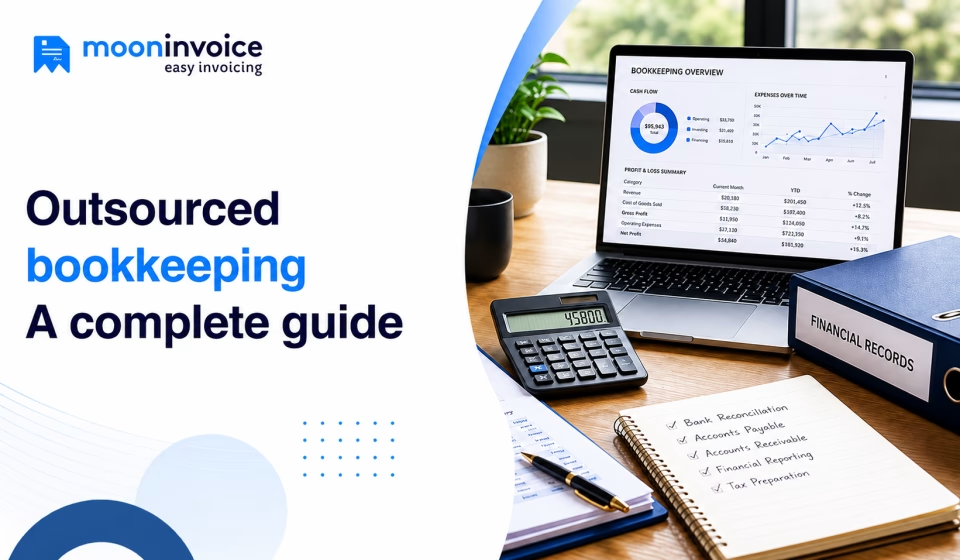
Outsourced bookkeeping refers to hiring external bookkeeping professionals to handle the business’s financial records. It means that instead of the internal team, experts from outside organizations handle bookkeeping. The major tasks include transaction recording, expense management, bank reconciliation, payroll, tax preparation, and financial reporting.
This approach helps businesses reduce workload and save time. It is also cost-effective because it reduces the need for an in-house team and other associated overhead costs.
Interesting insights:North America dominates the Finance and Accounting Outsourcing market with a 41.3% share. It generates USD 22.3 billion in revenue.
How does outsourced bookkeeping work?
The company begins researching outsourced bookkeeping service providers. It compares their expertise, services, pricing, and business needs. After proper evaluation, the business selects the most suitable option.
Once the agreement is in place, the service provider manages the agreed-upon tasks. It may include tracking expenses, payment recording, bank reconciliation, and financial reporting. In some cases, it also includes payroll and tax preparation. The hired bookkeepers provide monthly or quarterly reports as per agreement. The working approach depends on the type of bookkeeper you hire.
Often, outsourced bookkeepers work virtually. They manage bookkeeping tasks remotely using cloud-based accounting or financial management software.
Different types of outsourced bookkeeping services
Based on the tasks handled, the service scope, and how the services are delivered, outsourced bookkeeping services are classified as follows:
Partial bookkeeping
Partial bookkeeping involves the external team managing specific bookkeeping tasks. In simple terms, the company doesn’t give the hired party full responsibility for handling the task. Here, the internal team is involved and manages specific tasks.
For example, the internal accounting team handles the day-to-day bookkeeping for the company. But at year-end, they hire external accountants to reconcile accounts and prepare financial statements.
Full-service bookkeeping
The external team manages most of the bookkeeping tasks and provides monthly, quarterly, or other agreed-upon reports. This type of bookkeeping is suitable for companies seeking comprehensive bookkeeping support.
For example, a business gets all its bookkeeping tasks outsourced to an external bookkeeper. The hired bookkeeper handles all day-to-day tasks while the business focuses on its core operations.
Virtual bookkeeping
Virtual bookkeeping refers to managing bookkeeping remotely through cloud-based accounting tools. This kind of bookkeeping is well-suited to businesses that possess distributed teams, primarily operate online, or use digital tools.
For example, an e-commerce company hires a bookkeeper who records transactions, tracks invoices, and categorizes expenses remotely using cloud-based bookkeeping software.
Catch-up bookkeeping
Catch-up bookkeeping involves bringing a company’s outdated and incomplete financial records up to date by an external team. Usually, it is useful for organizations that have fallen behind on bookkeeping and need accuracy.
For example, a business has not updated its bookkeeping for the past six months. Later, it hires an external accounting expert to record the missing transactions and bring the financial records up to date.
Project-based bookkeeping
In this practice, companies outsource a bookkeeper to handle the accounting of specific projects. This is generally short-term compared with other bookkeeping practices. Software development companies and consulting firms usually opt for this kind of bookkeeping.
For example, a company hires an outsourced bookkeeper to handle the bookkeeping task of a specific project. The bookkeeper manages the task as long as the project remains active and completes the work when the project ends.
You are a few steps away from actionable insights.
Access 15+ reports to gain a clear view and make informed decisions for your business.
When should a business outsource bookkeeping services?
A business chooses to outsource its bookkeeping when there is a lack of experts, time constraints, and a need for professional reporting. Here are some conditions where outsourcing bookkeeping becomes necessary:
During business growth
Often, as a business grows, transaction volume increases, which leads to complexity. This requires additional time and resources to handle it well. When the internal team handles such transactions, it increases workload and consumes time. This is where outsourced bookkeeping is valuable to consider.
When better insights are needed
Hiring external bookkeepers can also be beneficial when the business needs timely, well-organized reporting. This is because these professionals are experts in maintaining financial records systematically. They also prepare reports that provide clearer financial insights.
When expertise is limited
Sometimes, the internal team struggles to manage their complex transactions. This could be either due to a lack of expertise or experience. In such situations, businesses need professional bookkeepers they can access through an outsourced bookkeeping service.
What are the benefits of outsourcing bookkeeping?
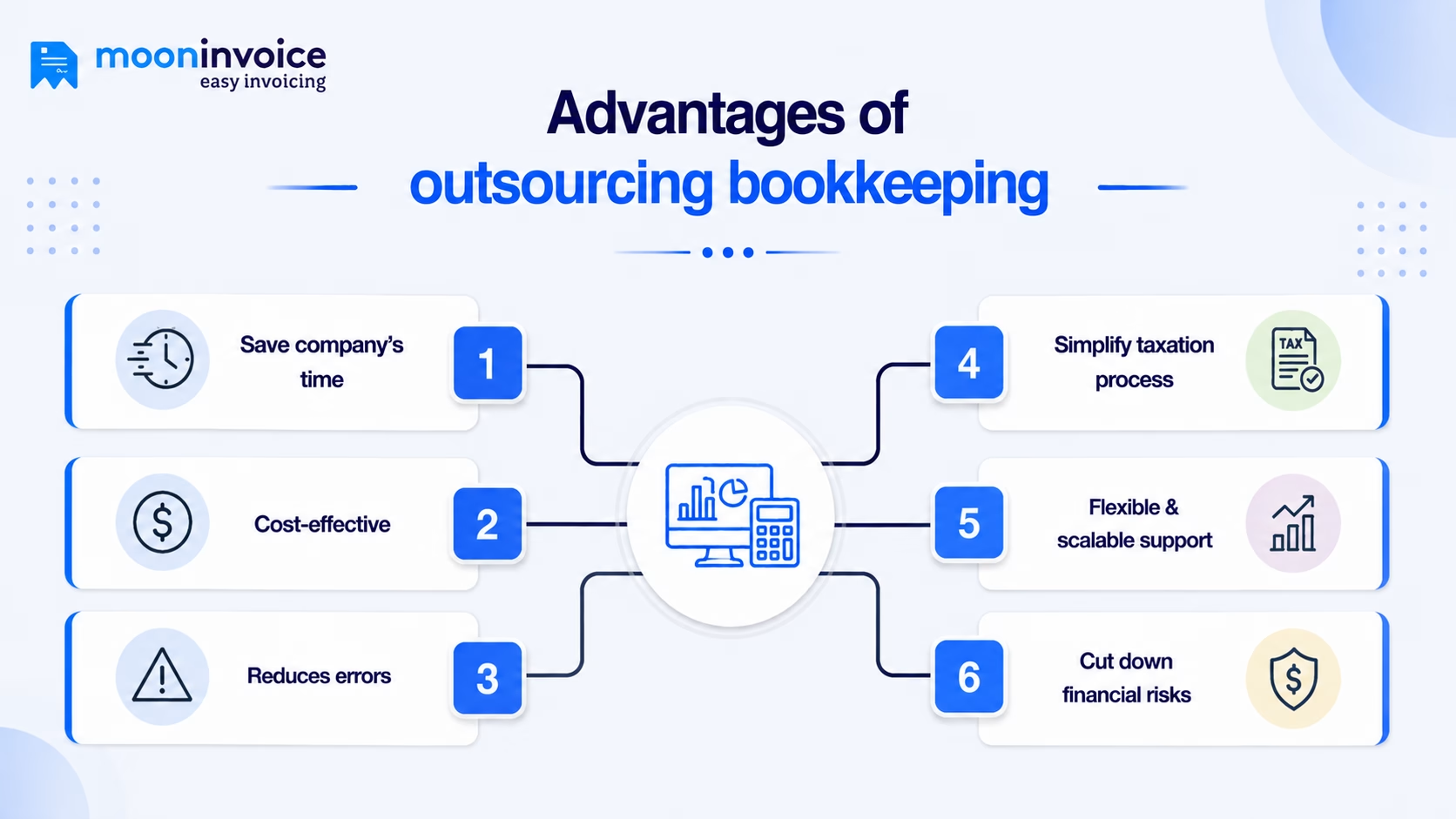
Adopting outsourcing bookkeeping is beneficial for businesses, especially growing firms. The following are the major advantages of outsourcing bookkeeping services:
Saves the company’s time
One of the most positive aspects of outsourcing bookkeeping is saving the company time. Handling payment reconciliation, tracking expenses, and analyzing profits is time-consuming. By delegating this responsibility to external parties, companies save time.
Cost-effective
Outsourcing bookkeeping is an affordable option compared to paying employee salaries. The service providers offer different packages to suit your needs. Businesses can pay monthly, hourly, or on a project-based basis. Businesses can reduce the costs often associated with full-time employment. These expenses can be employee insurance, training, and incentives.
Simplifies the taxation process
Tax season is a real headache for any business. However, with clear details of your bookkeeping, you can ease the process. Companies gain clean, on-time accounting reports that simplify tax returns. Most third-party bookkeepers are experienced and provide sound guidance on tax returns.
Flexible and scalable support
As a business grows, it experiences rapid sales growth but struggles with account management. By outsourcing bookkeeping, businesses can start with basic bookkeeping and gradually move to more advanced services.
Reduces errors
Outsourced bookkeeping combines standardized processes led by professional experts. Additionally, it includes regular account reconciliations and reviews. All these practices reduce the chances of mistakes and improve accuracy.
Cut down financial risks
Outsourced bookkeeping helps mitigate financial risks. Businesses can identify discrepancies early and maintain records accurately. Professional oversight helps to protect sensitive financial data and provides better control over it.
Key challenges with outsourced bookkeeping
Outsourcing bookkeeping is beneficial, but it still involves various kinds of challenges. Some of them are as follows:
Finding the right bookkeeper
This is one of the most common challenges that businesses face. Not every bookkeeping agency can fulfill your needs well. It’s difficult to get one with the right experience, industry knowledge, and software expertise. The best solution is to thoroughly evaluate outsourcing firms before finalizing.
Financial data protection risk
Giving accounting responsibilities to someone outside your business circle is somewhat risky. Businesses must choose a reputable service provider and check all the security measures before sharing sensitive financial data. You can only build trust when the service provider implements robust security measures when handling data.
Coordination and communication issues
Often, when the other party handles accounts remotely, this gives rise to communication problems. The issue might be due to time zone differences or inefficient communication channels. This negatively impacts the overall process, causing delays. You must establish strong communication on the right platforms.
Give rise to unexpected costs
Although outsourcing bookkeeping is cost-effective, it doesn’t guarantee lower costs in every case. There could be hidden costs in handling complex bookkeeping, taxation, and financial reporting. Also, costs increase with increasing services.
Increase dependency
Businesses depend on external parties to gain reports. Difficulty increases when the service provider is unavailable, not responding, or ends the service unexpectedly. This may disrupt the overall bookkeeping procedure.
What are the best practices to handle outsourced bookkeeping?
To manage outsourced bookkeeping efficiently, you must adopt the following practices:
Choosing a reliable bookkeeper
Always choose a reliable service provider by checking their experience and reviews. Also, look at their pricing structure to see whether it fits your budget. Additionally, don’t ignore the security measures they provide.
Maintains clear communication
Regular communication is quite important when you outsource any work. The same applies to bookkeeping. Communication should be active via calls, chat, or email to stay updated on the ongoing work. You can also schedule regular check-ins or meetings with the service provider.
Set clear responsibilities
Maintaining a clear distinction of tasks is important. Define the scope of tasks the outsourced bookkeeper will handle and those your internal team will handle. This reduces confusion about roles and responsibilities while keeping the process running efficiently.
Organize supporting documents
Organizing financial documents helps the bookkeepers work efficiently. Businesses must maintain invoices, bills, bank statements, and other important documents. This practice is also helpful in reviewing records and resolving discrepancies.
How much does outsourced bookkeeping cost?
Outsourced bookkeeping costs may vary based on your business type, transaction volume, and the services you need. You may need to pay either a fixed monthly amount or an hourly rate.
Basic bookkeeping service cost
The cost of a basic bookkeeping service could range from $350 to $5,000+ per month. The cost depends on business size, transaction volume, and complexity.
Per-month cost
- Small business – $350 to $1,300 per month
- Mid-sized business – $500 to $2,000 per month
- Enterprise business – $2,000 to $5,000+ per month
Hourly rate
- Entry-level bookkeeping – $20 to $40 per hour
- Experienced bookkeeper – $40 to $60 per hour
- Specialized bookkeeping – $60 to $100+ per hour
Full-service provider cost
This kind of service includes bank reconciliation, financial reporting, payroll support, and month-end closing. The cost of a full-service provider could range from $1,500 to $10,000+ per month. The cost depends on the scope of services and business complexity.
Per-month cost
- Small business – $1,500 to $3,000 per month
- Mid-sized business – $3,000 to $5,000 per month
- Enterprise business – $5,000 to $10,000+ per month
Hourly rate
An hourly rate is less common in full-service ongoing bookkeeping. However, some providers may charge as follows:
- Offshore provider – $10 to $25 per hour
- International freelancer – $30 to $60 per hour
- US-based outsourced bookkeeper – $50 to $80 per hour
- Specialized bookkeeping – $70 to $100+ per hour
The actual cost varies depending on current market conditions, transaction volume, locations, and business complexity.
Streamline business finances with Moon Invoice
Moon Invoice, an AI-powered invoicing software, helps businesses streamline their billing and financial management. Additionally, it simplifies the outsourced bookkeeping process by offering a centralized platform. Therefore, businesses and bookkeepers can systematically manage invoices, receipts, and other documents.
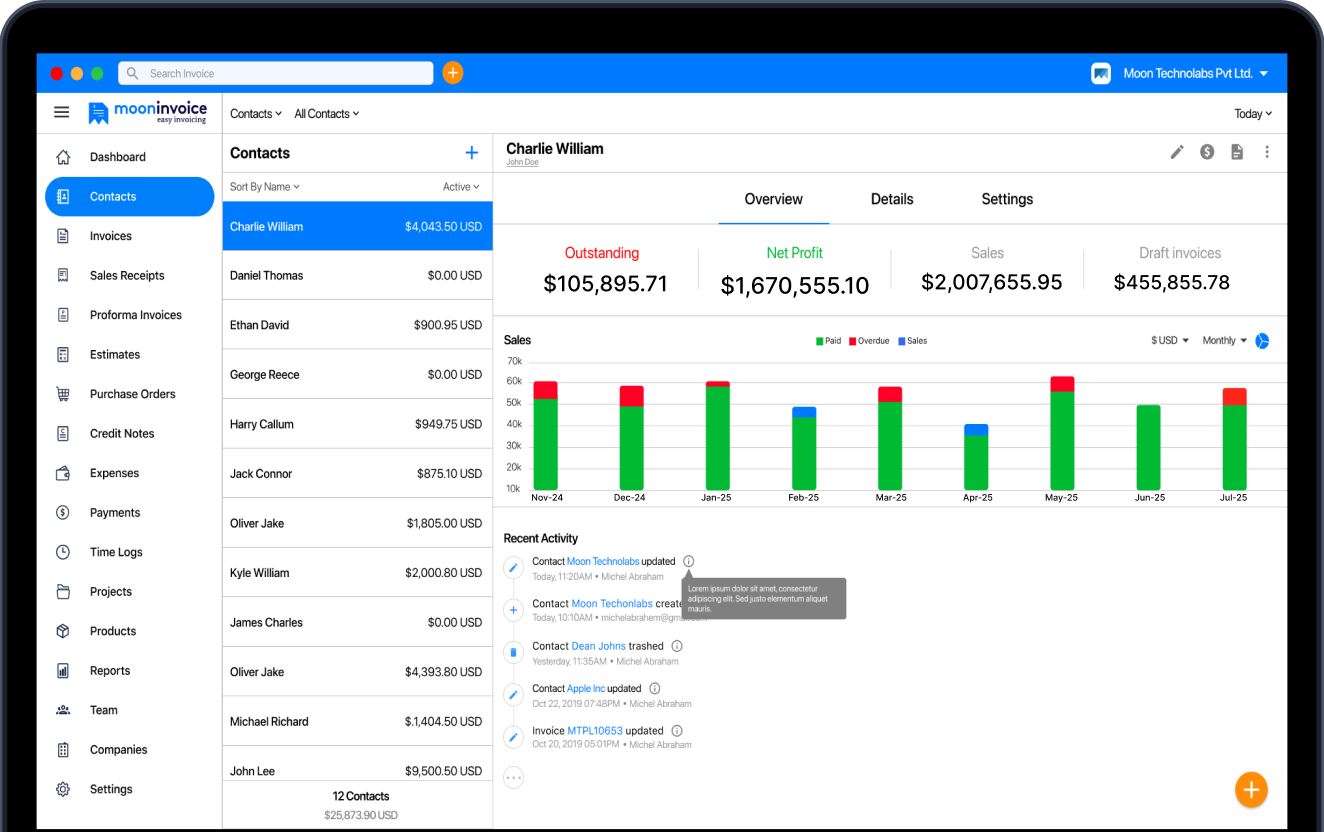
It offers a dedicated expense management module to record and categorize expenditures. Also, its 15+ financial reports help you track revenue, outstanding invoices, and profit and loss. It also allows you to generate custom reports and easily share them via WhatsApp and email. You can also view, export, and print them.
As it is a cloud-based tool, it also enhances collaboration. It allows businesses to grant access permissions for specific modules. This enables bookkeepers to view, add, edit, or delete data based on their assigned permissions, or have no access to certain modules.
Its AI-based features reduce repetitive tasks. The OCR technology allows you to create invoices, receipts, and other documents through the quick scan feature. Also, businesses or bookkeepers can quickly record payments through AI. This helps improve efficiency and also ensures accuracy.
Its bank reconciliation eases bookkeeping processes. Users can match the bank transactions with recorded transactions. This eliminates the manual work and saves time.
Overall, businesses and bookkeepers can manage finances more effectively. It reduces manual work and helps both parties to stay aligned.

FAQs on outsourced bookkeeping
Should I outsource my bookkeeping?
Is outsourced bookkeeping suitable for small businesses?
Is outsourced bookkeeping the same as outsourced accounting?
What tasks does an outsourced bookkeeper handle?
How can I share financial data with an outsourced bookkeeper?



Jayanti Katariya is the founder & CEO of Moon Invoice, with over a decade of experience in developing SaaS products and the fintech industry. He holds a degree in engineering. Since 2011, Jayanti's expertise has helped thousands of businesses, from small startups to large enterprises, streamline invoicing, estimation, and accounting operations. His vision is to deliver top-tier financial solutions globally, ensuring efficient financial management for all business owners.