


Definition
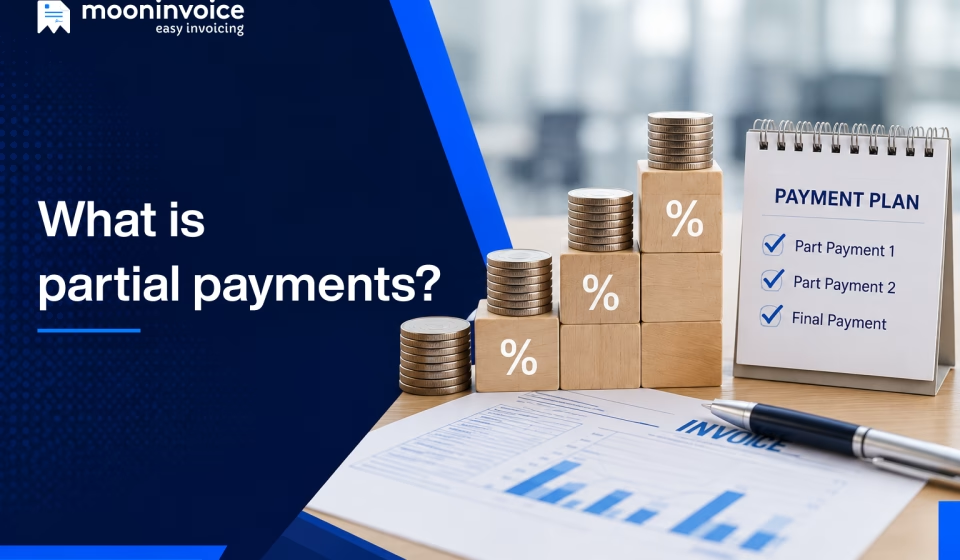
Partial payments refer to paying a portion of an invoice while leaving the remaining balance to be paid later. In simple terms, the partial payment meaning is making a payment toward the total amount without settling the invoice in full.
Partial payments can make it easier for businesses to collect money without requiring customers to settle the entire invoice at once. They are especially useful when a customer needs more time to pay a large amount while the business still needs to maintain a steady cash flow.
For example, a client may have a $5,000 invoice but can pay only $2,500 now and the remaining amount next month. Instead of waiting for the full payment, the business can accept the partial amount and track the remaining balance.
However, there are things to keep in mind when you accept partial payments. Your accounting team should have clear payment terms, accurate records, and a reliable way to track what has been paid and what is still due.
If you are wondering how partial payments work, their types, and the benefits of using them, this blog is exactly for you. Let’s get started…
📌 Key takeaways
- When a customer splits the payment into different parts and completes the payment is called partial payments.
- The most common types of partial payments are payment upfront, milestone payments, and installment payments.
- Creating a partial payment includes setting clear payment terms and updating the amount due on the invoice after each payment.
- Automotive and B2B enterprises are the types of businesses that mostly offer partial payments to their customers.
What is a partial payment?
A partial payment is when a customer pays only a portion of the total amount due on an invoice, with the remaining balance paid later. In simple terms, it can be described as smaller down payments on a large invoice. When all the partial payments are totaled, they equal the total amount specified on the invoice.
Businesses allow partial payments to receive money upfront without requiring the customer to settle the entire invoice at once.
The below is a standard formula to calculate partial payments:
Managing partial payments eating up valuable hours?
Consider your worries are over. Switch to Moon Invoice today and keep a record of every partial payment made right under your nose.
Examples of partial payments
Partial payments can look different depending on the type of business and the reason for collecting payment in stages. Here are two practical examples to understand how they work.
Example 1: Construction project
Let’s assume a contractor takes up a commercial building renovation project worth $60,000. To accomplish the project will require costs for materials and labor, and months of work. Considering this, both the contractor and the client agree to split the payment into stages.
The payment schedule could look like this:
- Total project cost: $60,000
- Initial payment: $20,000 (Before work begins)
- Second payment: $18,000 (After the structural work is completed)
- Third payment: $14,000 (After electrical and plumbing work)
- Final payment: $8,000 (After the project is completed)
Here, the contractor receives a partial payment at each stage rather than waiting until the entire $60,000 project is finished.
Example 2: Overdue invoice
Now, let’s consider a marketing agency with an overdue invoice for $12,500 from a client. The client is unable to pay the full amount immediately but agrees to make a partial payment of $5,000.
The payment status would be:
- Original invoice amount: $12,500
- Amount received: $5,000
- Outstanding balance: $7,500
- Remaining amount to be paid: $7,500
The agency records the $5,000 payment against the original invoice rather than treating it as a separate invoice. The client can then pay the remaining $7,500 on the agreed-upon repayment date or according to the payment schedule.
Different types of partial payments
Every business has a different way of collecting partial payments. The amount, frequency, and timing can vary depending on the project and cash flow needs. Here are some of the most common types of partial payments businesses use.
| Type | When payment is made | Common use |
|---|---|---|
| Upfront payment and deposits | Before work or service begins | Construction, custom orders, professional services |
| Milestone payments | After completing a specific project stage | Agencies, plumbing projects |
| Installment payments | At agreed intervals over a set period | Large purchases, long-term services |
| Progress payments | As work progresses and reaches agreed completion levels | Manufacturing, extended projects |
| Scheduled partial payments | On predetermined dates according to an agreed schedule | Long-term projects, recurring services |
| Unscheduled partial payments | Whenever the customer makes an agreed partial payment without a fixed schedule | Overdue invoices, flexible payment arrangements |
| Percentage-based partial payments | When a predetermined percentage of the invoice is due | Deposits, project-based services, large invoices |
| Partial payments on overdue invoices | After the original invoice due date | Outstanding invoices, repayment arrangements |
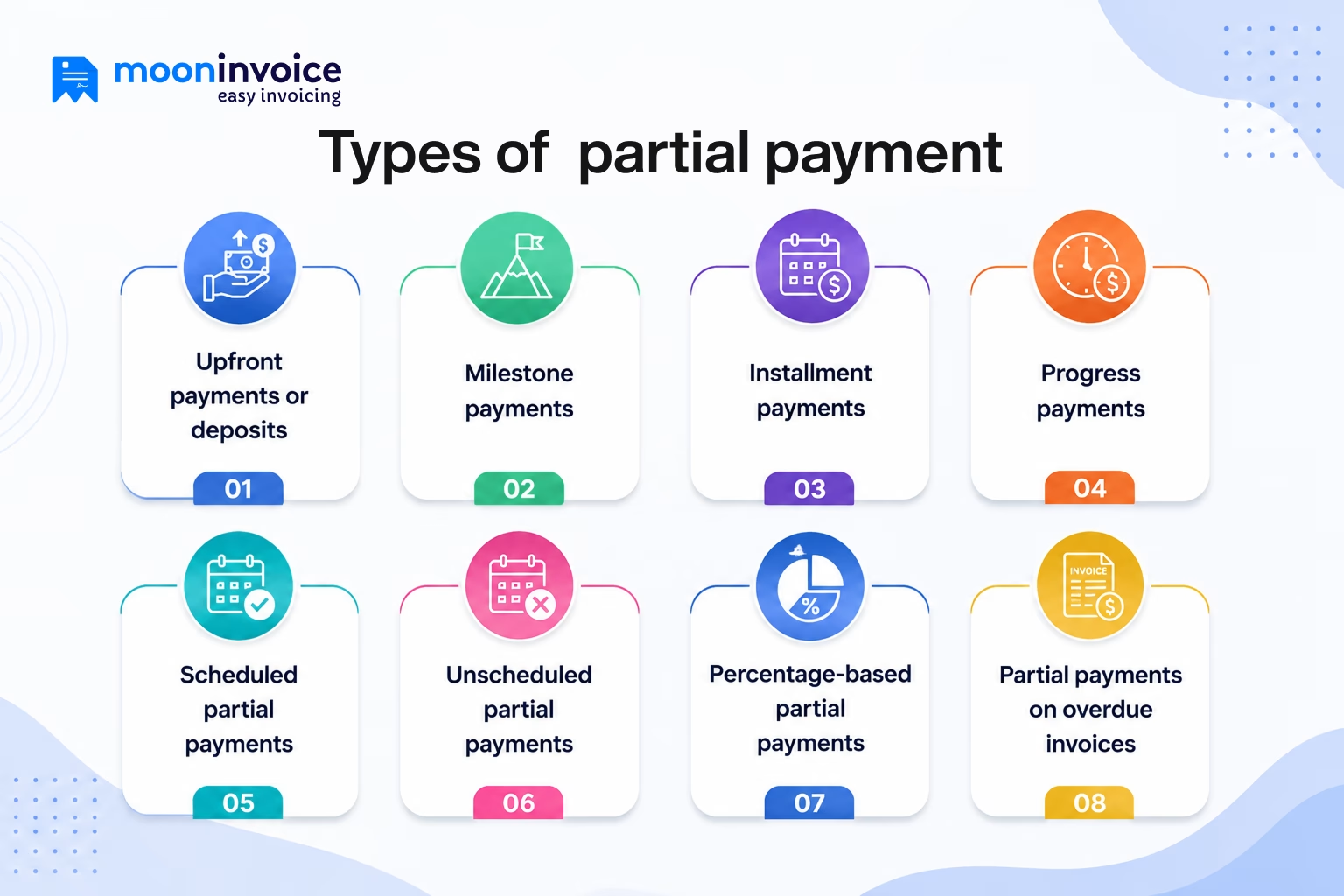
Even when there are multiple types of partial payments, the partial payment meaning does not change entirely. Here’s a brief look at the different types of partial payments.
1. Upfront payments or deposits
An upfront payment is collected before a business starts providing a product or service. It is usually a percentage or fixed amount of the total invoice and helps cover initial expenses such as materials, labor, or preparation costs.
2. Milestone payments
Milestone payments are made when specific stages of a project are completed. They are particularly useful for long-term projects where waiting until the final completion could put pressure on the business’s cash flow. Primary examples include construction projects and plumbing work in newly built residential buildings.
3. Installment payments
With installment payments, the total amount is divided into multiple payments that customers make over an agreed period. These may be fixed-amount partial payments or payments based on a percentage of the total.
4. Progress payments
Progress payments are linked to the amount of work completed rather than a fixed number of project milestones. They are common in construction, manufacturing, and other businesses where projects develop over an extended period.
5. Scheduled partial payments
Scheduled partial payments are agreed upon in advance, with specific payment amounts and due dates established before or during the transaction. For example, a business may require a customer to pay $2,000 every month toward a $10,000 invoice. This approach makes upcoming payments more predictable for both the business and the customer.
6. Unscheduled partial payments
Unscheduled partial payments are made without a predefined payment schedule. A customer may choose to pay a portion of an outstanding invoice when they have the funds available, usually after discussing the arrangement with the business. This can be useful when a customer cannot follow the original payment terms but wants to reduce the outstanding balance.
7. Percentage-based partial payments
Percentage-based partial payments are calculated as a specific percentage of the total invoice amount. For example, a business may request 30% upfront on a $5,000 invoice, resulting in a $1,500 partial payment. The remaining $3,500 can then be collected in accordance with the agreed payment terms.
8. Partial payments on overdue invoices
Sometimes, a customer cannot clear an invoice in full by its due date. Instead of making no payment at all, they may make a minimum payment, or another agreed partial amount toward the outstanding balance. For example, if a customer owes $5,000 but can currently pay $2,000, the invoice becomes partially paid, leaving $3,000 outstanding.
How to create a partial payment request on an invoice?
Let’s assume you have already created an invoice for the services you provided. Now, if you want to collect the invoice amount through partial payments, you can follow these steps to manage the payment request.
1. Set payment terms
Find the invoice for which you want to create a partial payment. After that, edit the payment terms and specify the initial amount the customer must pay. This process is much easier when you use advanced invoicing software, such as Moon Invoice, in your workflow.
For example, you can set the terms to “50% Due Upon Receipt” or “30% Due Upon Receipt.” This tells the customer how much of the invoice they need to pay immediately and allows them to initiate the first partial payment.
2. Add the payment breakdown
Next, define the payment breakdown so the customer can clearly see how the invoice total and partial payment are determined. Depending on the transaction, this breakdown can include the subtotal, applicable taxes, discounts, additional fees or charges, total invoice amount, amount paid, and remaining balance.
Breaking down each component keeps the invoice transparent. Also, customers get a clear view of what they need to pay now, what has already been paid, and what remains outstanding.
3. Send the updated invoice to the customer
Once the payment terms and amount are defined, send the invoice to the customer. The invoice should clearly show the total amount, the amount due now, the amount paid, and the remaining balance, where applicable.
This gives the customer a clear picture of how much they have already paid and what is still outstanding. It reduces the confusion when multiple payments are involved.
4. Keep your records clean
Once the customer has completed all agreed partial payments and no balance remains, update your internal records to show that the invoice has been fully paid. Keep a copy of the completed invoice along with the payment history and relevant transaction details.
Store these records securely in the cloud or your preferred digital record-keeping system so you can quickly retrieve them whenever needed. Keeping a copy of the original invoice, payment details, and final balance together creates a clear payment trail and makes future reconciliation, reporting, or customer queries easier to handle.
Types of businesses that use partial payments
Partial payments are highly useful for businesses where customers pay for high-value purchases or for work delivered in multiple stages. Let’s explore the points below to understand which types of businesses commonly offer partial payment to their customers.
1. Automotive
Automotive businesses offer partial payments to their customers for vehicle purchase, repairs, customizations, or major maintenance work. In some cases, a customer can pay a deposit even before a vehicle is ordered and settle the remaining amount later. Repair shops also request a partial payment before beginning expensive work and collect the balance when the vehicle is ready.
2. Real estate
Real estate businesses often deal with transactions involving substantial amounts. This makes partial payments practical for deposits, property purchases, rentals, or development projects. A partial payment strategy helps establish clear payment milestones for businesses. They can easily maintain their credit or account status accurately.
3. Contractors and home services
Contractors, electricians, plumbers, landscapers, and other home service providers also accept partial payments, collecting an initial payment before starting a project. They use scheduled partial payments for larger projects and handle unscheduled partial payments when a customer pays part of an outstanding invoice.
4. B2B enterprises
B2B businesses often work with large orders, recurring services, and long-term contracts. As a result, B2B businesses agree to deposits, milestone payments, or other staged arrangements with customers. Clearly defining payment amounts and due dates can help businesses manage cash flow. It also helps reduce confusion around outstanding balances, late fees, or missed payments.
5. E-commerce and retail
E-commerce and retail businesses use partial payments for high-value products, custom orders, pre-orders, or business-to-business purchases. Customers pay an initial amount to confirm an order and settle the remaining balance before delivery. Clear payment terms help both sides understand how much has been paid and what remains due.
Benefits of using partial payments
When partial payments are structured properly, they can make larger transactions easier to manage. Here’s a quick look at the key benefits of partial payments:
- Improves cash flow: Receiving part of the invoice amount before the work is completed gives businesses access to cash sooner. This can help cover materials, payroll, operating costs, and other expenses, rather than waiting for full payment.
- Makes large payments more manageable: Splitting a large invoice into smaller amounts can help customers manage their budgets. Instead of paying the entire amount at once, they can meet agreed minimum payment requirements over time.
- Helps cover initial project costs: Requesting a payment upfront can provide funds for materials, equipment, labor, or other expenses required to begin a project.
- Reduces the impact of late or missed payments: Collecting a portion of the amount early means the business has already received some revenue if the customer delays the remaining payment.
- Creates more predictable revenue: When payments are divided according to agreed-upon milestones or schedules, businesses can better anticipate cash inflows and plan expenses around expected collections.
One invoice. Multiple payments. Zero confusion
Leave the paper trails behind and manage partial payments of an invoice in one place.

Track payments
Maintain records
20+ payment integrations
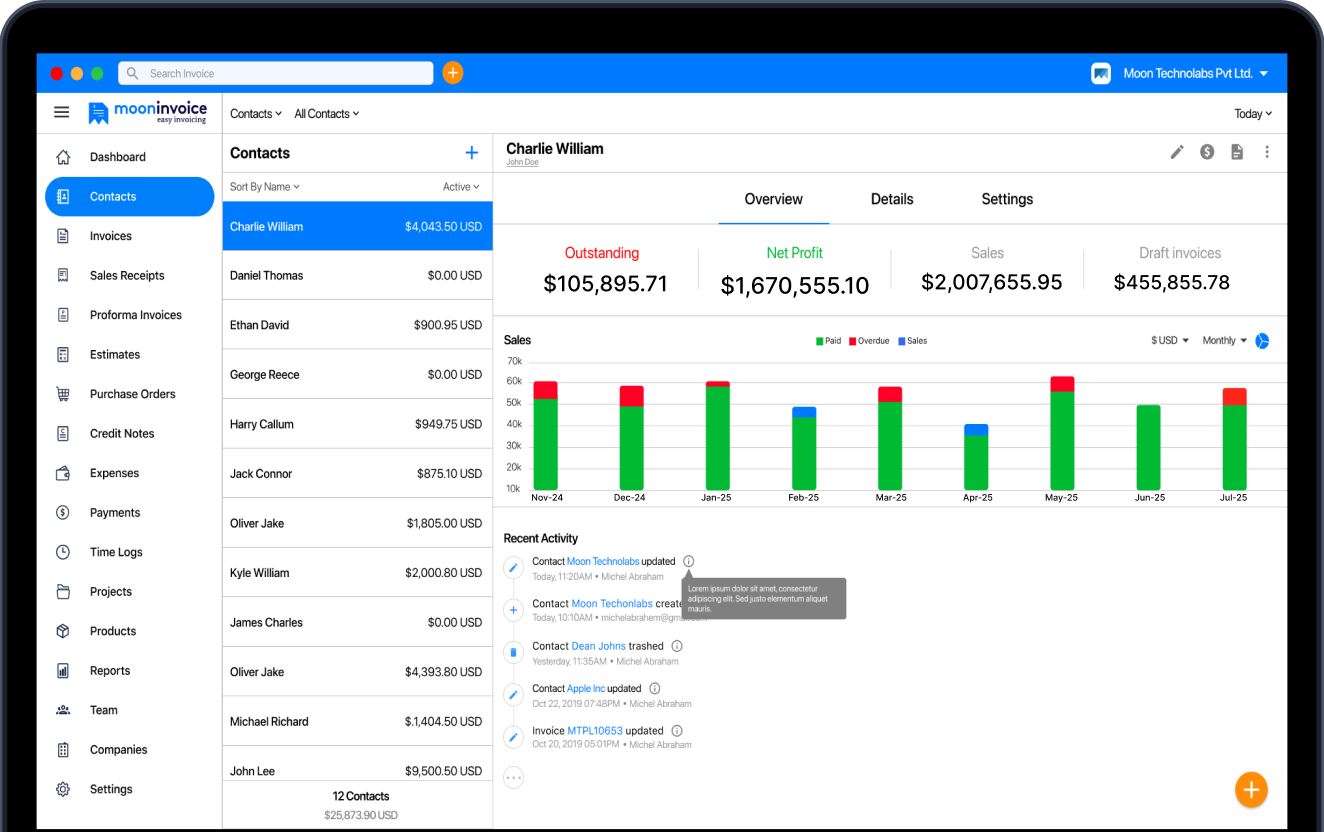
Manage partial payments effectively with AI-backed software
A partial payment doesn’t mean reducing the amount a customer owes. It is about creating a payment structure that works for both sides while keeping the business in control of its cash flow. An invoice with a partial payment option can also reduce the financial pressure on customers, as they don’t have to pay the entire amount immediately and can settle the remaining balance later.
However, managing partial payments without a well-defined approach can create confusion for your accounting team. If individual payments aren’t recorded accurately, it can become difficult to determine how much has been paid and what is still outstanding. A reliable invoicing software such as Moon Invoice can help keep these records organized.
You can also use its AI-powered Quick Scan to convert physical invoices into digital copies within seconds. With digital records, you can keep track of payment history, including partial payments, without juggling paper trails.
Get Moon Invoice today and keep your partial payments organized from the first payment to the final balance. Book a Demo Now!
Relevant questions on partial payments
What are partial payments?
How do you calculate a partial payment?
Does a partial payment change the invoice due date?
Can I request a partial payment before starting work?



Jayanti Katariya is the founder & CEO of Moon Invoice, with over a decade of experience in developing SaaS products and the fintech industry. He holds a degree in engineering. Since 2011, Jayanti's expertise has helped thousands of businesses, from small startups to large enterprises, streamline invoicing, estimation, and accounting operations. His vision is to deliver top-tier financial solutions globally, ensuring efficient financial management for all business owners.