
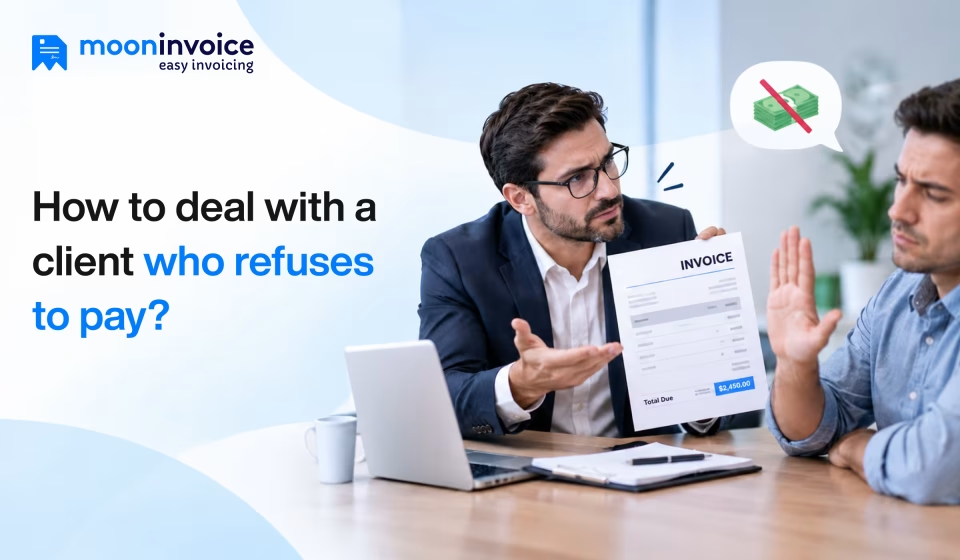


When a client is unwilling to pay invoices, first of all, confirm whether the invoice and payment terms are accurate and enforceable. Next, set up a direct phone call to understand the reason behind the refusal to pay an invoice. In case the matter goes out of your hands, you can head to a collection agency or consider filing a lawsuit.
If you have ever been preyed upon by such clients, then there is no need to panic or send angry emails. Taking a systematic approach will always yield better results than acting out of frustration. Here, we discuss steps to follow when dealing with non-paying customers, so you can recover your hard-earned money as quickly as possible.
📌 Key takeaways
- There are 6 crucial steps to follow when clients refuse to pay invoices for too long.
- Businesses can sue non paying customers when they have concrete proof.
- If an invoice is 90 days old, then you can reach out to a collection agency.
- AI billing software, Moon Invoice, can help in making invoices that get paid faster.
Necessary steps to follow when a client refuses to pay
Client not paying invoice even after multiple follow-ups? Below is what you can do next in a bid to collect payment.
Step 1: Verify the invoice and payment terms
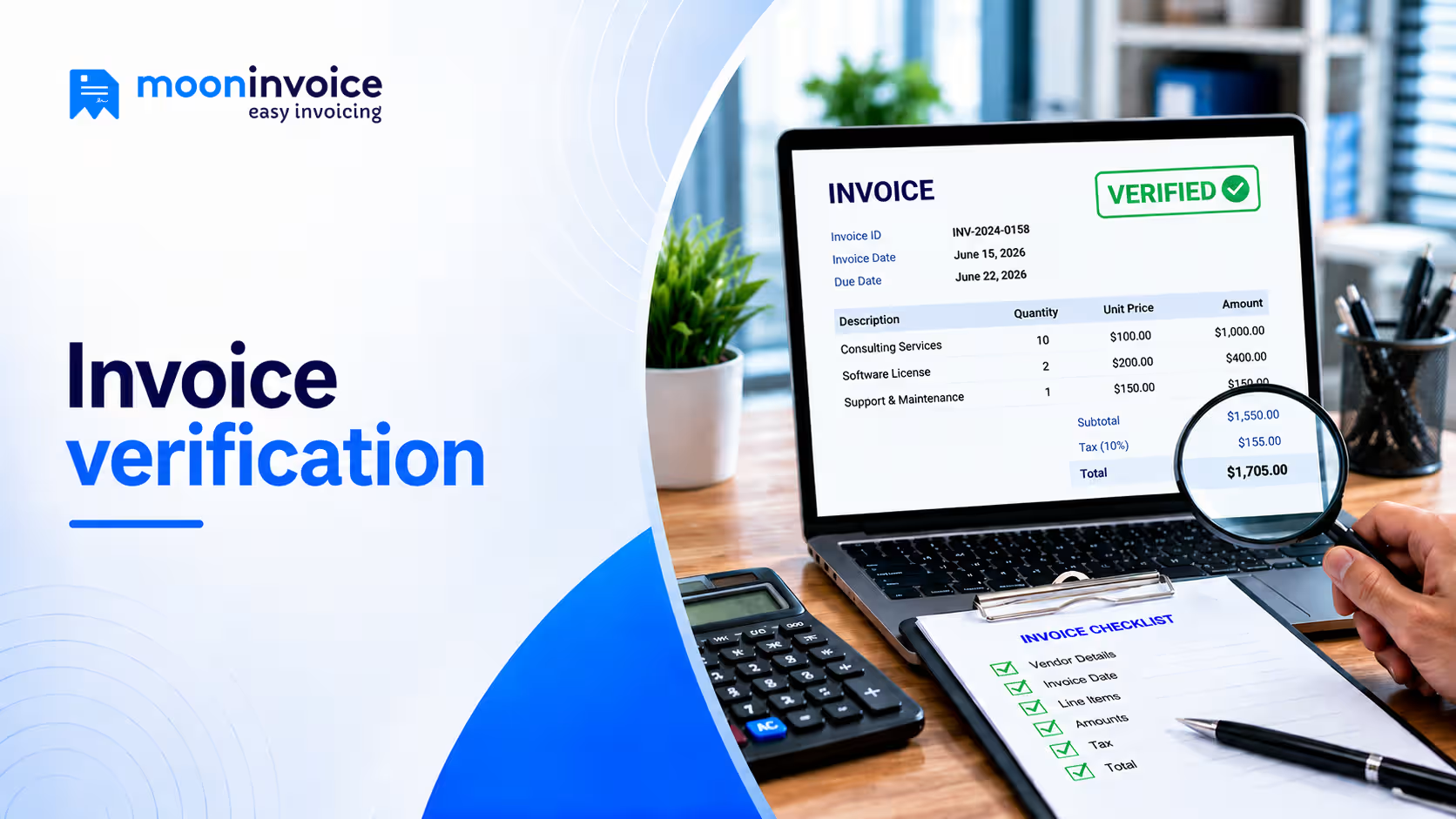
Before making any move, you need to assure that the dispatched invoice includes correct billing details and payment terms. If you have set payment terms to Net 30, you can not force the recipient to pay an invoice before a 30-day cycle. Therefore, scan an invoice thoroughly rather than following an aggressive approach.
During invoice verification, also double-check if an invoice was shared with the correct accounts payable department. Enforcing payment is far easier when you have indisputable proof that the client failed to meet their agreed-upon payment obligations. Once everything is reviewed, maintain a record of documents (or emails) and time logs to back up your claim.
Get rid of costly invoicing errors
Embrace Moon Invoice to design professional invoices where nothing gets missed
Step 2: Collect solid evidence
You have confirmed invoicing details. You have evidence. Next, preserve it. Because if you rely on just a phone conversation, chances are details will be contested or denied later. Solid evidence is what makes or breaks an unpaid invoice claim.
Therefore, start organizing all such documents, emails, contracts, or written approvals into a cloud-backed folder. This way, you are never going to lose them no matter what. And importantly, furnish the evidence the moment you need to negotiate firmly or hand a file over to a legal representative.
In case the client tries to dodge payment by stating the work was never completed, such concrete evidence will come as a rescuer. As a result, you can refute false claims instantly.
Step 3: Talk it out directly
Get on a phone call with a customer refusing to pay for work done and try to understand the reason behind not paying an invoice. Firstly, speak with the accounts payable department and negotiate carefully. If you fail to make a deal, then reach out to the CEO or CFO of the company you invoiced.
On a phone call, gently nudge the person you are speaking with about pending invoice dues. It’s okay to ask questions like why payment is taking so long to complete or if you received the original invoice. By doing so, you will get an idea of why an invoice is still outstanding. In case you find that they are unaware of the correct amount to pay, bring their attention to what’s pending.
Step 4: Draft a demand letter
Following a phone call, if you see no sign of payments coming to your account, start drafting a demand letter. A document that serves as a legal notice to whosoever is not paying invoice dues. The demand letter indicates you are serious about enforcing your rights. It also underscores the consequences of constantly refusing to pay an invoice.
Draft a strong debt collection letter that consists of key aspects like invoice number, total amount due, deadline, as well as payment reminders. Review the details you enter and, at the bottom, mention forwarding the matter to credit bureaus. Send a demand letter via mail, so you can later track and confirm whether the delinquent client received your final warning. Often, just dropping an official demand letter insists the client to settle the invoice without any delays.
Step 5: Approach a collection agency
Even after repeated warnings and no payments made, knocking on the door of a collection agency is a wise move. Following this step also relieves your stress of chasing payment. Because you now know someone else will take care of retrieving the payment. Thus, you can turn back your focus to whatever truly matters for your business.
Hiring a collection agency means a dedicated team handles the rest of your collection effort. They instruct the client (without empathy, of course) that the matter will soon reach the court. Such agencies usually run on a contingency basis, which means they take a small percentage fee only if they succeed in recovering the money.
Disclaimer:
This article is for general informational purposes only and does not constitute legal advice. Collection and legal procedures may vary by jurisdiction.
When to contact a collection agency?
Once your collection efforts hit a wall, you have little choice left except to consider third-party help. Here’s when to hand over the file to collection bureaus.
- If an invoice is 90 days old or more and follow-ups have gone unanswered
- If the client breaks multiple payment promises and is not interested in responding to your calls.
- If the client gives excuses and refuses to pay despite signed contracts.
- If the debt amount is too large to write off, but small enough for full legal litigation.
Step 6: Consider taking legal action
If the situation calls for an enforceable judicial decision, you may have to resort to taking your debtor to court. Small business owners often find this path to be the cost-effective one in securing a formal judgment.
By filing a case in small claims court, you can show evidence that the other party breached the written agreement by not paying the money. Small claims courts handle monetary disputes in a way that does not require complex legal representation. This is because your argument is straightforward, i.e., a clear breach of payment terms.
Do you really have to sue a non-paying client?
Definitely, you can sue customers not paying invoices when there is solid evidence highlighting the client’s non-compliance with the contract agreement, even after you have completed the work. So, if you have proof of the client’s unwillingness to pay the due invoice amount, you can surely file a lawsuit.
However, the right legal path may vary based on the amount owed and what your contract says about collection costs. As a result, you can sue your customers as long as you possess undeniable proof of breaching the contract.
Future-proof your business against non-payment
By now, you know following up on unpaid invoices is never that easy. But what if you can get rid of non-payment issues once and for all instead of chasing past-due invoices? Moon Invoice, an AI-powered billing software, makes it possible. How? It allows businesses to build personalized invoices that are tidy and easier to understand. On top of that, your customers can pay invoices without losing home comfort, which means no unnecessary physical meetings.
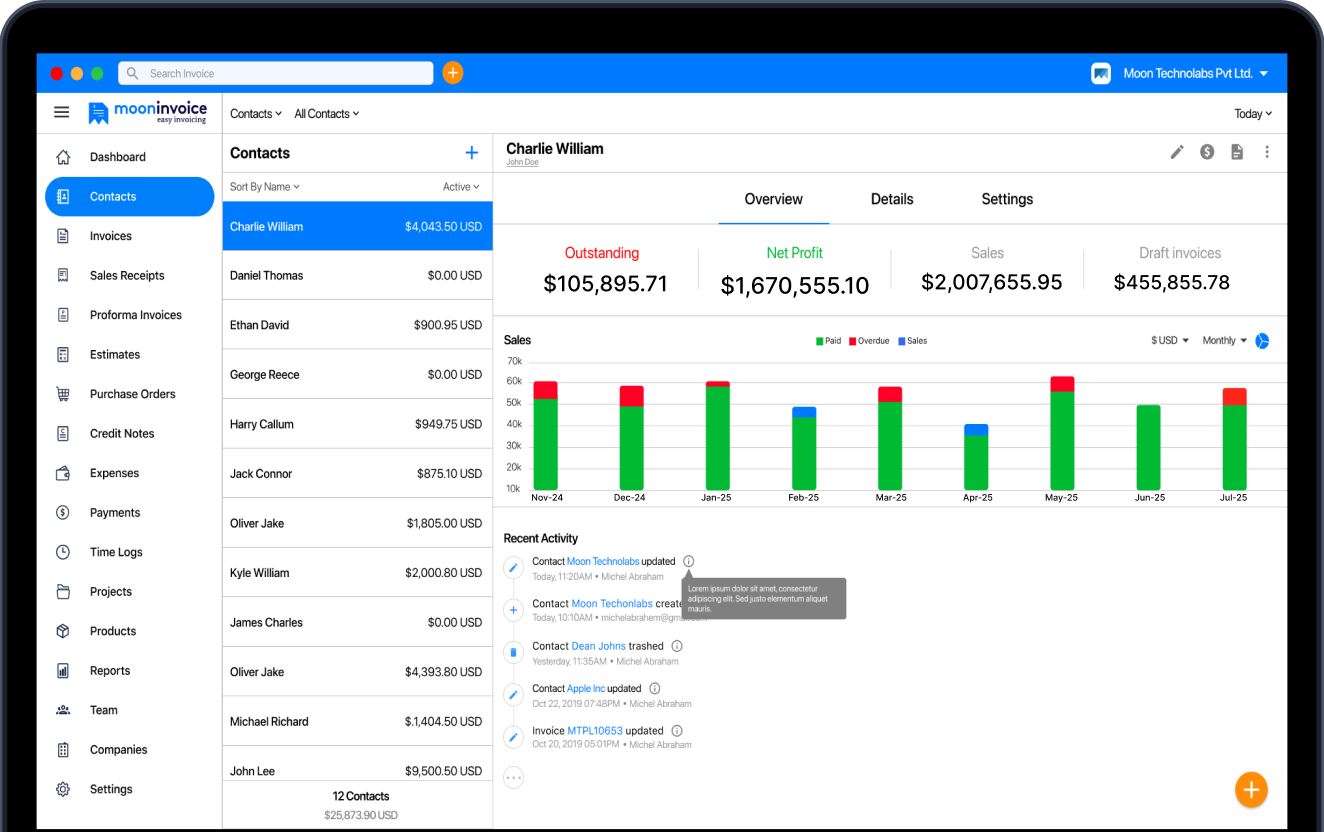
Moreover, you can turn on automatic payment reminders for delinquent clients, so nothing gets missed when you are busy. The invoice status gets updated as soon as the payment is received. Right, no need to update anything manually. Businesses can even manage agreements, POs, invoices, and bills in one single place, leaving nothing to chance.
Encourage your clients to pay instantly
Create invoices that pull payments faster
Custom templates
Online payments
Auto-reminders
Questions about why customers not paying invoices
Is an unpaid invoice considered a breach of contract?
What to include while writing a demand letter?
What to say to a client who hasn't paid?
How can Moon Invoice help prevent clients from ignoring due dates?
How long should I wait before escalating to legal action?
How to collect money from clients who won't pay?



Jayanti Katariya is the founder & CEO of Moon Invoice, with over a decade of experience in developing SaaS products and the fintech industry. He holds a degree in engineering. Since 2011, Jayanti's expertise has helped thousands of businesses, from small startups to large enterprises, streamline invoicing, estimation, and accounting operations. His vision is to deliver top-tier financial solutions globally, ensuring efficient financial management for all business owners.





















![How to Send an Invoice Via Email [Steps & Best Practices]](https://cdn.mooninvoice.com/mi-live/blog/wp-content/uploads/2022/12/13105719/send-an-invoice-blog-final.jpeg "How to Send an Invoice Via Email [Steps & Best Practices]")

































































![How to Write a Consulting Proposal? Key Steps [Template & Example]](https://cdn.mooninvoice.com/mi-live/blog/wp-content/uploads/2023/11/04134146/GuidetoWriteaConsultingProposal1.jpeg "How to Write a Consulting Proposal? Key Steps [Template & Example]")







![How to Calculate Retained Earnings [Example + Formula]](https://cdn.mooninvoice.com/mi-live/blog/wp-content/uploads/2023/12/29115729/HowtoCalculateRetainedEarning.jpeg "How to Calculate Retained Earnings [Example + Formula]")






























![How to Calculate Net Sales [Net Sales Formula]](https://cdn.mooninvoice.com/mi-live/blog/wp-content/uploads/2024/04/25100739/How-to-Calculate-Net-Sales-Updated-Guide-2024.jpg "How to Calculate Net Sales [Net Sales Formula]")























































































![Chart of Accounts 101 for Small Businesses [Definition & Chart of Accounts Example]](https://cdn.mooninvoice.com/mi-live/blog/wp-content/uploads/2025/06/09100111/Chart-of-Accounts-101-for-Small-Businesses-Definition-Chart-of-Accounts-Example.jpg "Chart of Accounts 101 for Small Businesses [Definition & Chart of Accounts Example]")
































![QR Code Menu: How to Create a Contactless Menu [A Complete Blueprint]](https://cdn.mooninvoice.com/mi-live/blog/wp-content/uploads/2025/12/15112114/QR-code-menu-feature-imag-01.jpeg "QR Code Menu: How to Create a Contactless Menu [A Complete Blueprint]")








![What is Payment Reconciliation? [Types, Examples & Best Practices]](https://cdn.mooninvoice.com/mi-live/blog/wp-content/uploads/2026/02/26071955/Payment-Reconciliation.jpg "What is Payment Reconciliation? [Types, Examples & Best Practices]")